



The most ancient form of Christian prayer is neither the rosary nor the memorized liturgy but rather Theurgy—literally “divine working” (θεουργία, from θεός, theos, and ἐργον, ergon). Where modern prayer tends toward petition (asking God for things) or praise (telling God how wonderful He is), Theurgic Prayer aims at something more radical: communion with divine beings themselves.
What Is Theurgic Prayer?
Theurgy emerged in late antiquity as a contemplative practice that sought to draw the practitioner into intimate contact with angels, archangels, and ultimately the Divine. Where prayer is essentially human-to-God conversation, Theurgy becomes something more like theophany—a divine encounter where heaven touches earth.
Classical Theurgic Prayer involves specific postures, rhythmic movements, sacred words of power (onomata saphē), and an interior stillness that opens the soul to receive not just God’s attention but His very presence. The ancient practitioner didn’t merely pray about God; they prayed toward God in a way that invited divine response.
Why Your Modern Prayer Is Missing Something
Consider your current prayer habits. You may pray with intention, perhaps even with devotion—but do you truly expect communion? Modern Christians have elevated prayer to one of the great disciplines: set aside ten minutes each morning, open your Bible or prayer app, and begin talking. A beautiful practice. But Theurgy asks whether we’ve confused communication with communion.
The word “prayer” itself contains this tension. In Greek tradition, prayer (προσευχή) came from προσ-εύχομαι—the prefix suggesting approach, drawing near—while the verb εὐχόμαι encompassed both petition and worship. But by the time Theurgy matured in Alexandria, prayer had acquired a distinctly vertical dimension: we are above, God is below—or conversely, we reach upward while He reaches downward toward us.
What happens when we stop merely talking to God and begin abiding with Him?
Why This Old Method Is Secretly Better
It creates space for listening. Modern prayer often feels like a performance—our words flowing outward in earnest pleas, grateful confessions, or theological affirmations. Theurgic Prayer, by contrast, cultivates the sacred silence between words where divine encounter actually happens.
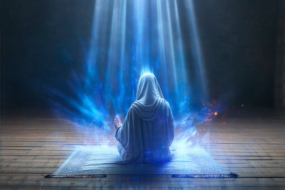
The ancients understood that God speaks primarily through presence rather than voice. When you kneel before the icon, close your eyes, and wait—not speaking but simply being—you participate in what St. John of Damascus called theoria: beholding what cannot be fully seen.
It engages body and soul together. Theurgy never divorced physical posture from spiritual intention. Standing, kneeling, prostrating—each movement was prayer itself, each gesture carrying theological meaning. Modern prayer frequently happens seated, eyes open or closed, mouth moving—but theurgy demands that you become your prayer.
It expects divine response. Ancient practitioners believed not only in God’s existence but in His capacity to respond specifically and tangibly. When they prayed, they didn’t just hope—they anticipated. They prepared their hearts through fasting, prostration, and stillness. They readied themselves as vessels of grace. And when the moment came, something genuine happened.
How This Ancient Method Works Today
To practice Theurgic Prayer today is not to abandon modern devotion but to deepen it:
- Begin with posture. Whether standing, kneeling, or prostrate—let your body participate in what you’re saying.
- Use sacred words. Not just any words, but the onomata saphē—names of divine power that carry presence and intention. The Lord’s name, the names of angels, the ancient doxologies—all of them become instruments of communion.
- Cultivate silence between petitions. Ask your questions, praise your God—but then wait. Let something enter you from above.
- Expect response. Don’t merely send prayers upward; receive what comes downward.
The Secret Beauty
The old method is secretly better because it bridges the gap that modern prayer so often leaves open: between asking and receiving, between speaking and being spoken to, between human initiative and divine encounter. When you pray as the ancients prayed, you enter a relationship—not just with God’s voice but with His presence.
Theurgic Prayer doesn’t abandon what makes modern prayer beautiful; it deepens it by adding expectation: not merely that God hears, but that He meets us where we are, in body and soul, now and forever.
This is why the old method secretly surpasses all others—not because it’s newer or louder or more comfortable—but because it remembers what prayer was originally intended to be: an encounter with heaven itself.


Recent Post



Gallery






Featured Videos







No Comments