



Introduction: Beyond Mere Chemistry
Alchemical transmutation is one of humanity’s most enduring mysteries—a discipline that bridges the material and spiritual realms, promising not merely to change base metals into gold, but to transmute the very essence of being itself. For over two millennia, practitioners have sought this profound transformation through careful study, experimentation, and inner work.
Understanding Alchemical Transmutation
At its core, alchemy is both a science and a spiritual path. The term derives from the Arabic al-kīmiyā, and encompasses far more than laboratory procedures. True transmutation involves:
- Matter transformation — Converting lead into gold
- Spirit refinement — Elevating consciousness to higher states
- Essence extraction — Isolating the divine within base matter
- Purification — Removing all impurities through successive stages
The Three Principles of Alchemy
The ancient alchemists identified three fundamental substances governing transformation:
- Mercury (Quicksilver) — The fluid, changing essence; represents spirit and movement
- Sulfur — Combustibility and the soul’s flame; signifies passion and will
- Salt — Solidification and body; embodies stability and permanence
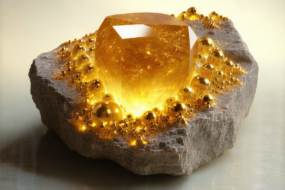
When these three principles harmonize in a single substance, they create the lapis philosophorum—the philosopher’s stone, capable of effecting miraculous transmutation.
The Great Work: Stages of Transformation
Stage I — Nigredo (Blackening)
The initial phase where matter darkens and decomposes. This stage symbolizes death to the old self and dissolution into chaos. In practice, it involves putting things asunder and breaking down structures so that renewal can begin.
Stage II — Albedo (Whitening)
Purification through light. The materia is cleansed of impurities, representing the awakening of spiritual consciousness. This stage marks the emergence from darkness into understanding.
Stage III — Citrinitas (Yellowing)
The birth of new life and solar illumination. Often associated with wisdom and the beginning of true knowledge.
Stage IV — Rubedo (Reddening)
The final stage where transformation is complete—the stone takes on a red hue, signifying the achievement of the Great Work. The alchemist himself becomes transfigured alongside his materia.
Practical Methods of Transmutation
Laboratory Transmutation: Using precise ratios of substances and careful manipulation of heat (calcinatio), dissolution (dissolutio), separation (separatio), conjunction (conjunctio), fermentation, digestion, fixation, and sublimation.
Spiritual Transmutation: Through meditation on the symbols, understanding the correspondences between microcosm and macrocosm, and living in accordance with natural law.
The Philosopher’s Stone
The philosopher’s stone is not merely a physical substance but represents perfected matter—the quintessence that can transmute base metals into gold and grant longevity to those who partake of it. It requires:
- Perfect proportion of the three principles
- Complete purification from all impurities
- Conjunction of opposites (sun and moon, male and female)
The Symbolic Language of Alchemy
Alchemy employs rich symbolism that transcends mere description:
- The Ouroboros — serpent eating its tail symbolizes cyclical transformation
- The Rebis — hermaphroditic figure representing the union of opposites
- The Tree of Life — mapping the stages of spiritual development
- Fire and Water — active and passive principles in constant interaction
Applying Alchemical Principles Today
While medieval alchemists sought literal transmutation, modern practitioners recognize that alchemy operates on multiple levels:
- Chemical: Actual laboratory work with substances
- Psychological: Jung’s concept of individuation mirrors alchemical stages
- Spiritual: Inner transformation through contemplation and practice
- Practical: Using alchemical principles in daily life
The Path to Mastery
To experience true alchemical transmutation, one must:
- Cultivate patience (the work often takes time beyond human expectation)
- Develop keen observation skills
- Understand the correspondences between all things
- Maintain inner balance through meditation and contemplation
- Practice consistently over extended periods
Conclusion: The Living Stone
The greatest achievement of alchemy is not a physical stone but an enlightened consciousness capable perceiving the gold hidden within base matter—in every substance, in every soul. True transmutation occurs when the practitioner becomes what they seek, embodying the very change they wish to accomplish.
Experience it yourself and see how everything is changed.


Recent Post



Gallery






Featured Videos





No Comments