


Introduction
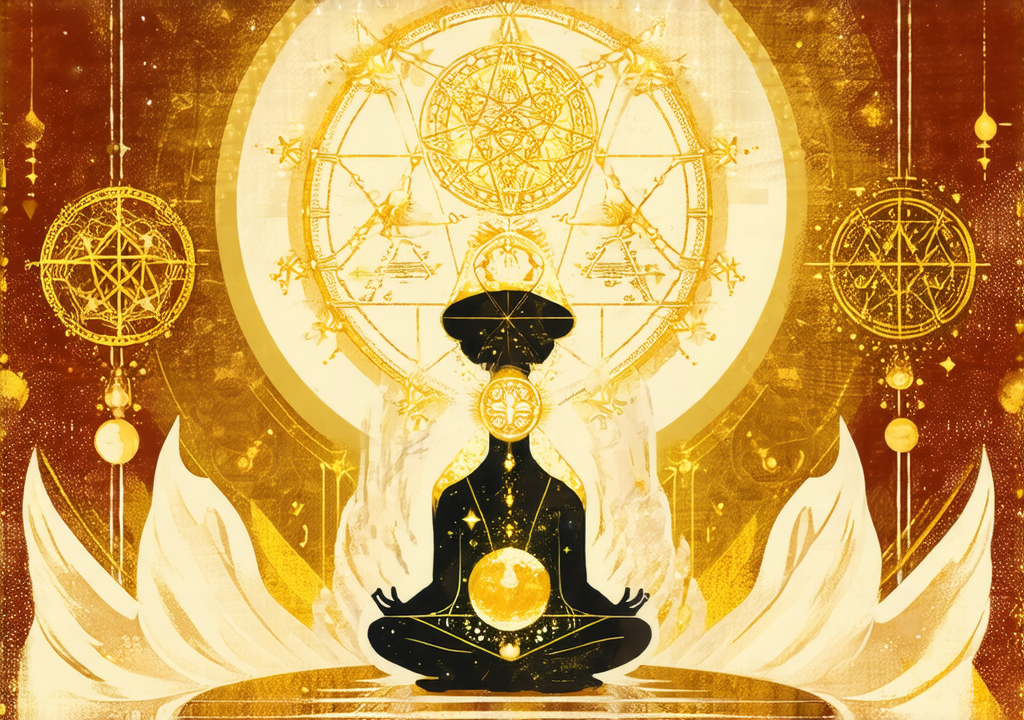
For centuries, alchemists have whispered of their greatest ambition—transmutation itself. Not merely the chemical conversion of lead into gold, but the deeper metamorphosis where base matter transforms into divine substance, where spirit becomes radiant with an eternal light. The true art lies not in the alembic or crucible, but within the alchemist’s own soul, which serves as both laboratory and subject.
The foundation of transmutation rests upon a profound truth: everything participates in a universal exchange between matter and spirit, between form and essence. Lead is simply gold that has fallen asleep; mercury is spirit condensed into substance; sulfur is the fiery spirit within all things; salt is the body that holds the other two. When an alchemist understands these principles, they understand that transmutation begins not with any external operation but with the awakening of their own inner vision.
The Great Work: External and Internal Operations
The legendary Opus Magnum—the Great Work—was never merely about converting base metals into gold through external operations like calcination, sublimation, dissolution, coagulation, and multiplication. These were mere reflections of a deeper internal alchemy that took place within the practitioner’s own being throughout their quest for mastery.
The outer laboratory was always secondary to the inner crucible where transmutation occurred naturally, almost effortlessly, when one understood how spirit could be infused into matter through proper alignment with cosmic forces and divine principles. The Magnum Opus proceeded through seven stages: Nigredo (blackening), Albedo (whitening), Citrinitas (yellowing), Rubedo (redding), and finally the Philosopher’s Stone—a substance so perfect that it could transmute any base metal into gold with mere contact.
But what most alchemists did not tell you was that this external work actually mirrored an internal transformation taking place within the practitioner themselves, their own spirit being refined through the same processes they employed upon metals and minerals.
The Principles of Transmutation
At its heart, transmutation requires understanding three fundamental principles: the Prima Materia (first matter) from which all things originate, the Materia Præparationis (prepared matter), and the Lapis Philosophorum—the Stone itself, that perfect substance containing within it the potential for infinite transmutations.
The prima materia was said to be hidden in every material object, waiting to be discovered by those with eyes to see it. It existed as a subtle essence permeating all things, manifesting initially as lead but capable of being gradually purified through successive operations until nothing remained except gold itself—gold refined and perfected beyond even the highest standard.
The prepared matter was that which had been cleansed, calcined, dissolved, and combined in perfect proportions so it could receive the form it sought to become. It required patience, for each stage had its own proper timing, its own particular virtue, and each operation demanded specific conditions of temperature, atmosphere, and alignment with celestial influences.
The Stone: Gateway to Divinity
The Philosopher’s Stone was not merely an agent of transmutation; it represented the perfected state itself—both as substance and as a living principle that could operate upon matter from within. According to ancient texts, once created, the Stone could multiply itself through contact with prepared matter, creating more stone until eventually all matter in its presence would become gold.
But this external transmutation was merely a reflection of something far greater: the alchemist’s own transformation into a perfected being who had conquered death and achieved divine communion. The Stone contained within it the Materia Præparationis, which itself held the Prima Materia—the prime substance from which all creation sprang—and through proper application, could elevate base matter to its highest potential form.
Practical Application: How to Transmute Within
To practice transmutation begins with understanding that you are both practitioner and material. Each morning before beginning your day’s work, spend ten minutes in quiet contemplation—allowing your mind to settle into stillness as the external world quiets down around you. This meditation prepares the internal laboratory where spirit will soon be merged with matter through deliberate intention.
The process requires three essential elements: materia primum (the first material), spiritus (the subtle essence within all things), and a clear understanding of how these interact in your daily life. When you understand that every moment offers opportunity for transmutation, the art becomes accessible rather than rare and mysterious.
Conclusion: Becoming What You Seek
The greatest secret of alchemy is not revealed through special chemicals or elaborate procedures—it lies within our own being as we practice this sacred work each day. The Stone itself was always present in its purest form from the beginning; the alchemist merely needed to recognize it and learn how to access its power through conscious participation with cosmic forces and divine principles.
To transmute base matter into gold is indeed wondrous, but to transmute one’s own spirit into divinity is truly remarkable—a transformation so profound that few realize it even happening until they have become what they sought all along.


Recent Post



Gallery






Featured Videos






No Comments