


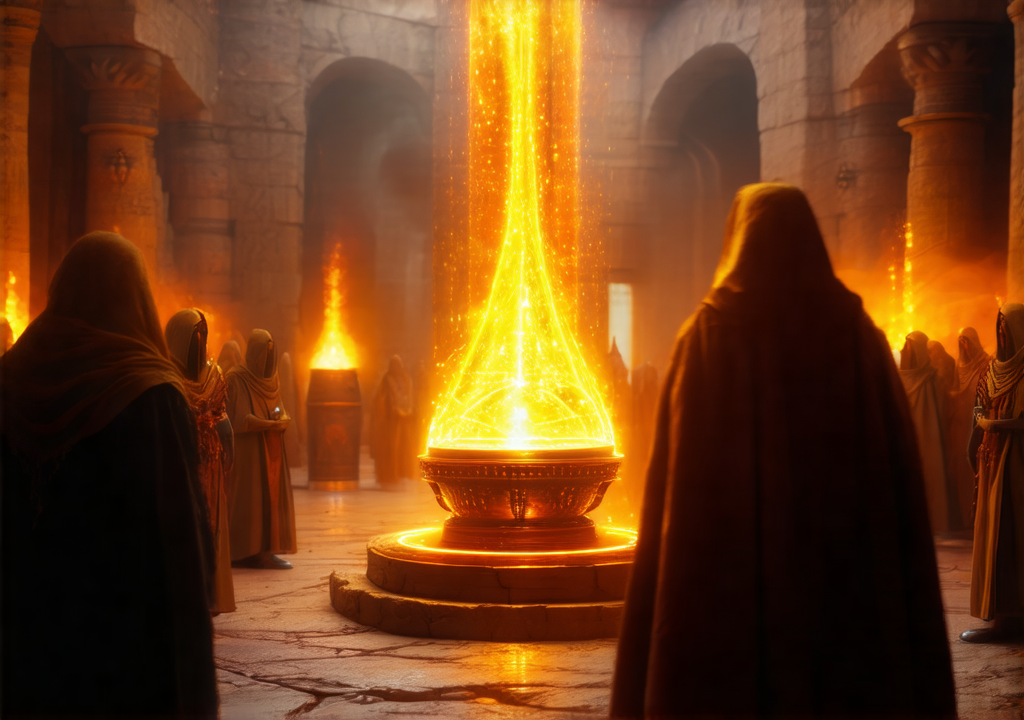
For centuries, alchemy was dismissed as the province of eccentric philosophers scribbling cryptic symbols on parchment, but something remarkable is happening now: a global renaissance in transmutation practices that has taken even modern science by surprise. Why Everyone Is Suddenly Obsessed with Turning Base Matter into Gold isn’t just an observation—it’s the title of a cultural phenomenon that bridges ancient wisdom and contemporary innovation.
The Alchemical Foundation
At its heart, alchemy rests on three pillars: mercury (the volatile spirit), sulfur (the combustible soul), and salt (the fixed body). When properly combined through fire and time, these prima materia can be elevated to the philosopher’s stone—a substance so perfect it could transmute lead into gold. The ancients understood that this wasn’t merely metallurgy; it was a spiritual discipline where matter itself held potential divinity.
The Modern Resurgence
What makes the current fascination with transmutation particularly striking is its convergence of multiple cultural currents. Materialism has reached an inflection point where people seek deeper meaning in physical substances. Climate change and sustainability concerns have elevated discussion about what constitutes “precious” materials. Social media has democratized alchemical knowledge, turning obscure practices into accessible concepts. And perhaps most importantly, we’ve entered an era where the boundaries between science and mysticism are collapsing.
The Science Behind the Myth
Modern research validates ancient alchemical insights in surprising ways. Quantum physics reveals that all matter is fundamentally energy—energy that can be transformed. Nuclear transmutation, already practiced on a small scale through particle accelerators, demonstrates literally turning one element into another. The philosopher’s stone finds an analogue in nanotechnology and quantum computing. Even traditional alchemy’s emphasis on purification, timing, and intention has parallels in modern pharmaceutical science.
Why Gold Matters More Than Ever
Gold is no longer just a store of wealth; it represents something more fundamental: permanence, purity, beauty, divinity. In our age of digital impermanence—where fortunes can vanish overnight, where currency exists as mere code—gold offers something tangible and eternal. The gold standard’s collapse in 1971 was supposed to be the death knell for traditional value systems; instead, it sparked a new understanding of what “value” truly means.
The Practical Application
Modern transmutation isn’t just about laboratory experiments or medieval manuscripts. It appears in renewable energy technologies that convert sunlight into electricity (literally turning base light into usable power). It shows up in biochemistry where enzymes catalyze reactions between simple molecules. It manifests in art, music, and literature as creators seek to elevate ordinary materials into extraordinary expression. The practical wisdom of alchemy applies equally to a goldsmith’s workshop, a quantum computing lab, or an artist’s studio.
The Deeper Meaning
What truly drives the current obsession with transmutation is our collective desire for transformation—not just in matter but in ourselves. We live in an age where change happens constantly, rapidly, and often without our consent. Alchemy offers a model of intentional transformation: deliberate, measured, purposeful. When we transmute base matter into gold, we’re modeling how to transmute our own ordinary lives into something more meaningful.
The Future of Transmutation
The future promises even more dramatic transformations. Quantum computing will allow us to manipulate matter at the atomic level. Biotechnology will enable new forms of alchemical synthesis within living organisms. Space exploration will bring rare elements from celestial bodies directly into human hands. And as traditional barriers between science, art, and spirituality continue to dissolve, we may finally see a unified understanding of how matter transforms—and what that transformation means for us.
Conclusion
The reason everyone is suddenly obsessed with turning base matter into gold has less to do with literal metallurgy than with a deep cultural shift toward valuing authenticity, permanence, and transformation in an increasingly ephemeral world. Alchemy offers not just a method for transmuting lead into gold, but a framework for understanding how anything can be elevated—how the ordinary becomes extraordinary through intention, fire, and time. The modern fascination isn’t nostalgia; it’s revelation.


Recent Post



Gallery






Featured Videos





No Comments