


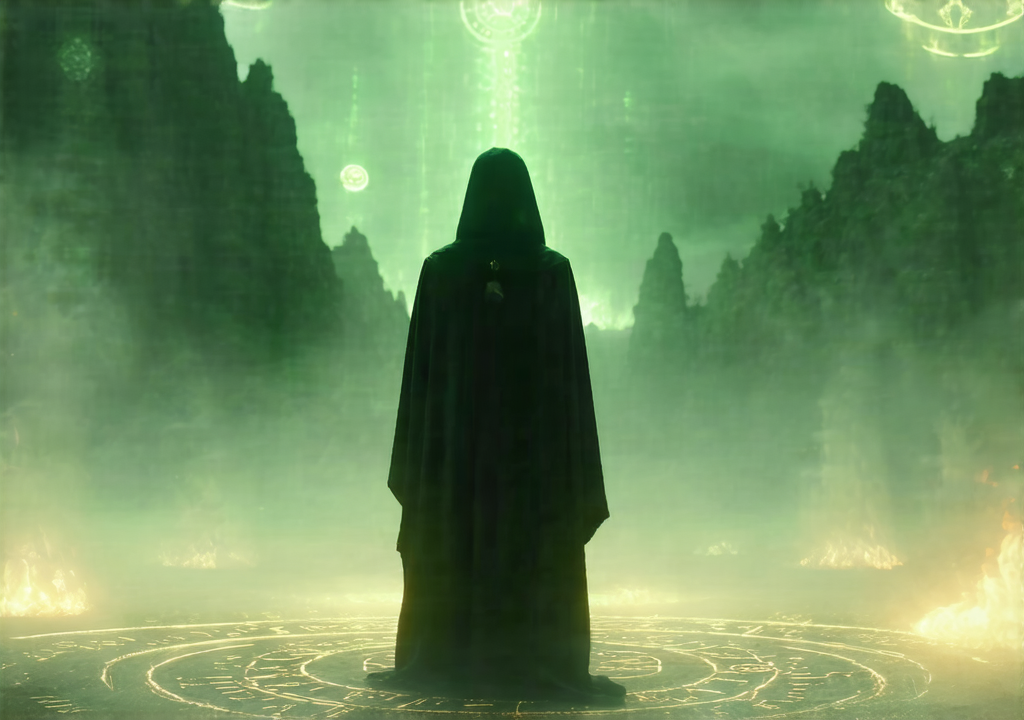
The Ancient Art Reborn
Ceremonial magic—the practice most commonly known as ritual magic or high-ritual practice—is one of humanity’s oldest traditions, yet it remains strikingly vibrant in our modern world. While spells have been cast across millennia, from the sun-baked temples of Mesopotamia to the candlelit chambers of medieval grimoires, ceremonial magic occupies a unique position: it is both ancient and contemporary, systematic and spontaneous, disciplined and deeply spiritual.
At its core, ceremonial magic represents humanity’s attempt to work intentionally with forces beyond ordinary perception—whether those forces are understood as angels, spirits, elements, or simply the hidden architecture of reality itself. Unlike folk magic, which often relies on simple charms and intuitive gestures, ceremonial magic demands precision: specific words spoken in exact cadence, circles drawn with geometric care, candles positioned according to astrological timing, and intentions held with focused clarity.
The Structure of Sacred Practice
What distinguishes high-ritual practice from simpler forms of magic is its reliance on elaborate ceremonies. These ceremonies typically include several key elements that work together to create a sacred space where magical operations can take place:
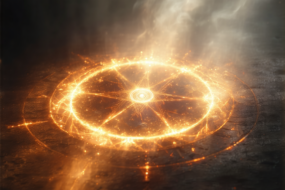
The Circle—a protective boundary, often drawn with chalk or etched into metal, serving as both protection and a focused workspace within which the practitioner operates.
The Altar, where symbolic tools are arranged according to tradition—the pentacle, athame, wand, chalice, and incense holder each carrying specific meanings that vary slightly depending on the tradition employed.
Liturgy—the spoken prayers, invocations, and magical formulae that are often written in precise language and sometimes in ancient tongues such as Latin or Greek.
Timing, drawn from astrological calculations—operations performed during particular planetary hours, on specific days of the week, aligned with lunar phases, and even at moments when celestial bodies align in certain configurations.
What makes ceremonial magic so compelling is that it doesn’t require belief in the supernatural to be effective; rather, it requires commitment, discipline, and an ability to hold intention steadily during ritual performance. The ceremony itself becomes a kind of language—a way of speaking directly with forces that shape reality.
Historical Foundations
The history of ceremonial magic stretches back thousands of years. Ancient Egyptians practiced what we might call proto-magical rites in their temples, where priests would perform elaborate ceremonies to maintain cosmic order (ma’at) against the chaos surrounding them. The Greeks adopted and adapted these practices, as did the Romans, who brought with them a sophisticated system of divination and sacrifice.
During the Middle Ages, European magicians developed what became known as “high magic”—rituals that employed elaborate geometry, angelic names, and complex invocations. One particularly influential figure was Heinrich Cornelius Agrippa (1486–1533), whose Three Books of Occult Philosophy remained the standard reference for ceremonial magicians for centuries. His work synthesized earlier traditions into a coherent system that emphasized the power of divine names and the relationship between the celestial and terrestrial realms.
In the Renaissance, figures like John Dee (who consulted with Queen Elizabeth I) pushed the boundaries further, experimenting with spiritual contact through angelic magic and developing mathematical systems to support ritual practice. The Hermetic Order of the Golden Dawn, founded in 1887, brought together centuries of accumulated magical knowledge into a unified system that remains influential today.
Why Ceremonial Magic Matters Now
In our contemporary world, ceremonial magic matters for several reasons:
First, we live in an age where people have access to vast amounts of information but increasingly little guidance on how to apply it meaningfully. Ritual practice offers structure—a way to organize thought and intention into coherent form—and the ability to return to familiar patterns during times of uncertainty.
Second, modern life often feels fragmented: work, home, digital presence, community—each sphere demands its own attention without necessarily contributing to a unified sense of purpose. Ceremonial magic provides a framework for integration. When someone performs ritual, they are literally drawing boundaries and creating centers, establishing order in the chaos around them.
Third, as science has moved us away from mythic ways of understanding the world, ceremonial magic preserves what we might call a “mythic consciousness”—a way of perceiving reality that honors both empirical observation and symbolic meaning. Rather than rejecting either science or spirit, it holds them together in tension, like two notes held simultaneously on an instrument.
Finally, and perhaps most significantly, ceremonial magic is not merely about achieving specific results—it’s a practice of becoming oneself through sustained engagement with the sacred. Each ceremony becomes a kind of personal cosmology: you learn what matters to you by paying attention during ritual, and over time this deepens into genuine wisdom.
The Living Tradition
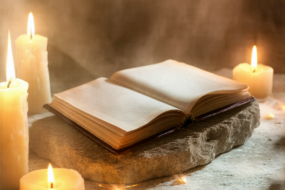
What distinguishes true ceremonial magic from mere imitation is its living quality. While ancient texts provide invaluable guidance, practitioners don’t merely repeat old ceremonies—they engage with them creatively, adapting forms as needed while maintaining the core principles that give them power. A modern magician might use both traditional tools and digital devices; a contemporary grimoire might blend handwritten notes with computer formatting; a ritual circle might be cast in an urban apartment or performed outdoors beneath city lights.
The tradition continues to grow. New practitioners discover its depth each day, while older ones find new insights after decades of practice. The circle remains the same—a boundary between known and unknown—but within it, infinite possibilities unfold.
In this sense, ceremonial magic is not just a technique for achieving specific ends—it’s a way of being in the world that treats life itself as an opportunity to discover meaning, create order from chaos, and participate actively in the ongoing drama of existence. Whether performed with elaborate ceremony or in quiet simplicity, it remains one of humanity’s oldest practices—and one of our most enduring gifts to ourselves.


Recent Post
Gallery






Featured Videos




No Comments