


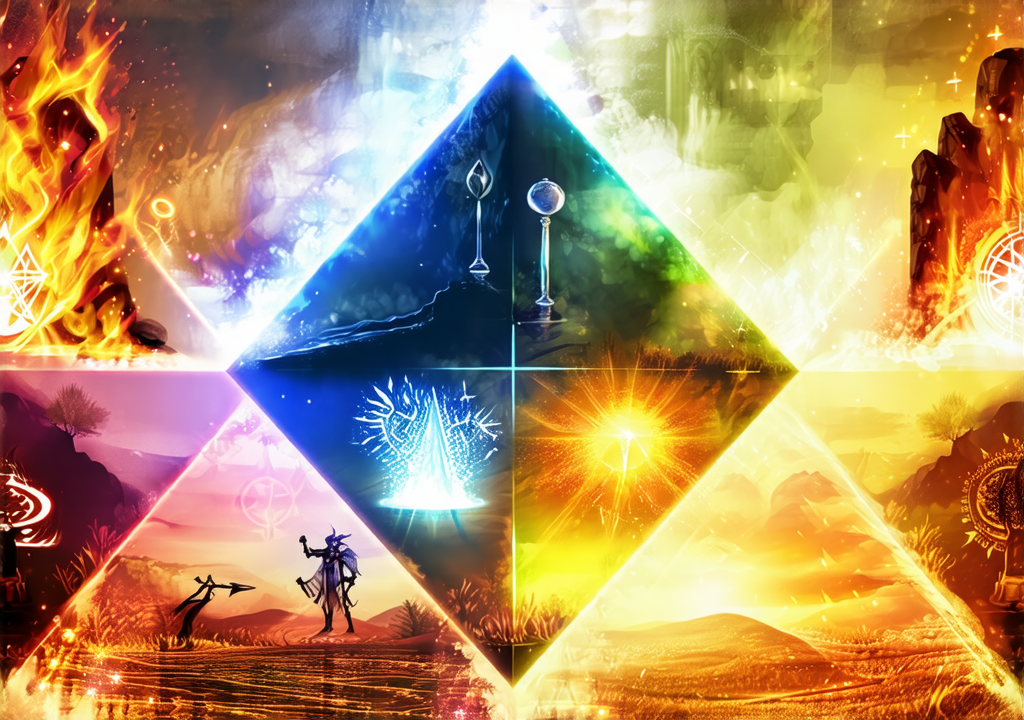
Introduction: The Architecture of Ritual
When you step into a ceremonial magic circle, whether it be for evocation, invocation, consecration, or exorcism, every element—be it air, fire, water, earth, salt, wax, bell, wand, sword, chalice, athame, pentacle, candle, and incense—is neither arbitrary nor decorative. Each carries profound significance, embodying ancient correspondences that connect the visible world to invisible forces. Ceremonial magic is not merely about doing things in a particular way; it is about aligning one’s will with the fundamental structures of reality itself.
This article explores the hidden meanings behind every essential element of ceremonial practice and how you can harness their power for your own rituals.
The Elements: Foundation of All Things
Air (Incense, Bell, Wand)
Air represents intellect, thought, communication, and breath—the vital spirit that animates all living things. In ceremony, incense rising upward symbolizes the ascent of prayers and intentions from the material to the spiritual realm. The bell’s ring serves as a marker between ordinary time and sacred time, while also purifying the space through sound vibration.
Practical Application: Burn frankincense or sandalwood during invocation rituals when calling upon higher intelligences; use air (wind, breath) in spells involving communication, travel, and mental clarity.
Fire (Candle, Athame, Snake Oil)
Fire embodies will, transformation, passion, and divine inspiration. The candle’s flame represents the presence of divine fire—the spark that transforms base matter into spiritual substance. The athames (ritual knives) channel this fiery energy, cutting through illusion and directing intent.
Practical Application: Light a red candle for acts of will; use fire-related correspondences in spells involving purification, protection, and creative manifestation.
Water (Chalice, Oil, Snake Oil)
Water signifies emotion, intuition, the subconscious, and receptivity. The chalice receives offerings and represents the feminine principle of receptivity that allows spirit to manifest form. Water-based elements are crucial for divination, healing, and emotional work.
Practical Application: Use water for divinatory purposes; place a chalice at your altar’s southern or eastern point (depending on tradition); employ water-related spells for cleansing and renewal.
Earth (Pentacle, Salt)
Earth grounds the ritual, provides stability, fertility, and connection to material reality. The pentacle—often inscribed with symbols of protection and abundance—represents the physical world in all its richness. Salt, perhaps the most potent earth element, is simultaneously purifying agent, preservative, and boundary marker.
Practical Application: Draw your magic circle in salt; place a pentacle at your altar’s eastern or western position depending on tradition; use earth correspondences for grounding, protection, and material blessings.
The Sacred Instruments: Tools of the Magus
Wand
The wand is the primary instrument of will extension—your active, masculine, fire-bringing tool. It directs energy outward toward specific targets, whether in spellcasting or ritual dance. A wand made from living wood (cut during waxing moon) carries particular potency for spells involving growth and vitality.
Usage: Hold your dominant hand when casting; point it at the element you wish to invoke or release during consecration.
Athame
The athame is a black-bladed knife used primarily in the left hand, representing fire and will. It marks sacred space with its sharp edge and cuts through spiritual veils. Its black blade absorbs negative energy; its white handle connects to divine inspiration.
Usage: Cut the circle during opening; perform banishing rites; use for cutting rituals (divorce, separation) when appropriate.
Chalice
The chalice holds water or wine—both representing life’s essence—and receives offerings from below and above simultaneously. It is receptive rather than active, feminine rather than masculine in its nature.
Usage: Offer libations during communion with spirits; use to contain the magical substances you create (snake oil, ritual wine).
Bell
The bell marks transitions, calls attention to specific moments, and purifies air through vibration. Its clear ring breaks ordinary time and creates sacred space. The bell’s sound carries intention upward.
Usage: Ring at the beginning of each major phase; call spirits during invocation; close circle with deliberate strikes.
Essential Materials: Vessels of Transformation
Salt
Salt is perhaps the most fundamental element in ceremonial magic—both purifying and preserving, both destructive to corruption and life-giving to ritual. It marks boundaries (draw your salt lines around circle), represents earth’s essence, and connects the material world to divine presence.
Usage: Draw circles with salt; use for purification of spaces, people, and objects; place in bowls at each elemental direction.
Wax
Candles are not mere containers of fire—they carry specific qualities based on their color (red for vitality, white for purity, black for banishing). The wax itself is a transformative substance that can be shaped into sigils, inscribed with symbols, and charged through ritual.
Usage: Inscribe sigils directly onto candles; burn in candle magic correspondences to elemental directions; use colored waxes for specific intentions.
Incense
Each incense carries not only scent but spiritual quality: frankincense raises prayers, myrrh purifies, sage cleanses air, cedar invokes protection. Different resins carry different spirits and energies.
Usage: Burn specific incenses during elemental invocations; hold while visualizing intention rising upward; use to consecrate tools or spaces.
Elements in Practice: Building Your Ceremonial Arsenal
A properly prepared ceremonial space includes all four elemental directions marked, candles placed at each point (red for south/fire, white for north/water, green for east/air, and black for west/earth), an athame held in the left hand during banishing, a wand held in the right during invocation, incense burning before the altar, and salt encircling the magic circle.
The true power of ceremonial elements lies not in memorizing correspondences but in feeling their qualities directly—holding each tool, touching them to your skin, tasting salt, smelling incenses—and allowing the symbolic language to become a living conversation between spirit and matter. This is where ceremony becomes more than rote: it becomes genuine magic.


Recent Post


Gallery






Featured Videos





No Comments