



Introduction: The Ancient Art Reborn
Beneath the noise of modern life lies a tradition as old as civilization itself—a disciplined practice where intention meets intention, and the practitioner becomes both teacher and student in one. Ceremonial magic is not merely about casting spells or invoking spirits; it is a comprehensive system for shaping reality through precise ritual, geometry, and will. To enter this world is to discover that beneath the surface of everyday experience exists an architecture of meaning, waiting to be engaged by those willing to learn its language.
What Is Ceremonial Magic?
At its core, ceremonial magic is distinguished from other magical traditions by its emphasis on formal ceremony. Where folk magic might involve spontaneous gestures or natural remedies, ceremonial magic demands precision—carefully prepared tools, specific timings, repeated invocations, and deliberate actions performed in consecrated space. The word “ceremonial” itself derives from the Latin caerimonia, referring to sacred rites and the observance of formal procedures.
A practitioner does not simply will a result; they construct an entire ceremonial framework within which that result becomes natural and inevitable. This might involve drawing pentagrams, inscribing magic circles, arranging talismans according to planetary hours, invoking divine names in sequence, and performing specific gestures at precise moments. The difference between casual magic and true ceremonial magic is often the difference between throwing a pebble into water versus engineering an entire hydraulic system.
Historical Foundations: From Antiquity to the Renaissance
Ceremonial magic traces its roots through multiple traditions. The Hermetic tradition of ancient Egypt and Greece provided early foundations for magical practice, with texts like the Emerald Tablet revealing a cosmology in which “as above, so below” becomes both metaphor and method.
The medieval period saw the development of grimoires—manuscripts containing instructions for various magical operations—including the Key of Solomon, which codified many practices that remain central to modern ceremonial magic.
Perhaps most influential was the Renaissance revival of Neoplatonic philosophy, particularly through figures like Marsilio Ficino and Giovanni Pico della Mirandola, who argued that human beings could directly participate in divine forces through contemplation and ritual. This philosophical framework became essential to what we now call “high” or “ceremonial” magic—the kind practiced with full awareness of its metaphysical foundations.
The Great Tradition: Western Esotericism
Western esoteric tradition has been the primary vessel for ceremonial magic, passing it from one generation to another through centuries of continuous practice. Figures like John Dee and Edward Kelley in Elizabethan England, and later Eliphas Levi, Papus, and Élipas Lévi, developed systematic approaches to magic that emphasized both theory and practice.
The Hermetic Order of the Golden Dawn (founded 1887) synthesized centuries of Western esoteric knowledge into a single coherent system. Their methods influenced virtually every modern magical organization and remain central to how ceremonial magic is taught today. Through them, we inherit not just specific practices but an entire worldview in which the universe is alive with subtle forces that can be perceived, understood, and engaged through disciplined practice.
Core Principles of Ceremonial Magic
Several principles run consistently through ceremonial magic practice:
The Principle of Correspondence: Everything in the macrocosm corresponds to something in the microcosm; everything above mirrors something below, and every particular reveals a universal pattern. This is not mere analogy but genuine participation—when you work with corresponding elements, you are working directly with reality itself.
The Principle of Involutions: Powers descend from the highest levels of being through progressively denser forms until they manifest in matter; conversely, human beings can ascend this ladder through proper practice, recovering knowledge of their own nature and potential.
The Principle of Attraction by Resonance: Like attracts like. When a practitioner creates within themselves a resonant state corresponding to what they wish to receive or accomplish, that thing is drawn toward them as naturally as iron to lodestone.
The Practitioner’s Toolkit: Symbols, Tools, and Temples
CEREMONIAL MAGIC employs an elaborate set of tools, each carefully prepared according to specific correspondences:
- The Pentagram: Used both for invocation and exorcism; its geometric properties make it uniquely suited to containing and directing magical forces.
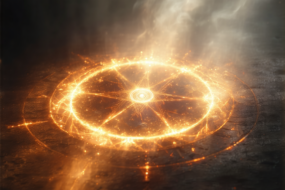
- Magic Circles: Sacred spaces that define the boundaries within which ritual takes place. They protect from outside influence while concentrating power within.
- Talismans and Sigils: Inscribed objects carrying specific powers or intentions, activated by proper methods of consecration.
- Planetary Hours: Each hour of the day is governed by a particular planetary principle; choosing the right time can amplify effectiveness.
Practical Applications: From Simple to Profound
Ceremonial magic is not reserved for grand displays; it operates at many levels:
Daily Observance: A morning invocation, evening meditation, and simple nightly blessing constitute practices that build magical sensitivity over time without requiring elaborate apparatus or lengthy ceremony.
Planetary Works: Larger ceremonies aligned with planetary hours and corresponding days (Sunday for the Sun, Monday for Luna, etc.) allow practitioners to work with specific cosmic forces in ways that affect both their inner life and external circumstances.
Higher Ceremonies: The most ambitious works involve elaborate preparations lasting days or weeks, including fasting, purification of space, construction of specific diagrams, and extended invocations—works capable of producing genuine transformation.
Common Pitfalls for the Aspiring Practitioner
The path to mastery in ceremonial magic is not without obstacles. Several common errors plague those who begin:
Confusing ritual with mere repetition: A practitioner may go through elaborate motions without understanding what they mean or why, performing ceremony as empty form. The key is presence—the ability to be fully conscious during each act of the work.
Neglecting the inner state: Ceremonial magic works best when outer actions and inner intention are aligned; a perfectly performed ritual performed with distracted mind will produce results inferior to one half-performed with full awareness.
Overcomplication: Too many symbols, too much apparatus, too long ceremonies can obscure rather than clarify. Many practitioners find that the simplest ceremony, performed at the right moment with genuine intent, accomplishes more than elaborate displays performed in haste.
The Future of Ceremonial Magic
In an age increasingly characterized by fragmentation and superficiality, ceremonial magic offers something increasingly rare: a way to engage reality seriously, directly, and systematically. Its methods are not primitive nor obsolete; they are precisely calibrated for the needs of sophisticated practitioners who seek both depth and results.
Whether you approach it as mystical path or practical discipline, as a system for personal transformation or as a framework for interacting with unseen forces, ceremonial magic offers genuine value to anyone willing to invest the necessary time and attention in learning its language.
Beginning Your Journey: Practical Steps for New Practitioners
- Study one tradition deeply rather than attempting to master many superficially
- Learn the basic tools—pentagram, circle, talisman-making—before expanding outward
- Practice consistently, even if briefly; a short daily practice builds more real progress than occasional elaborate sessions
- Read with intention: select one key text per tradition and read it repeatedly over months rather than skimming many texts once each
Conclusion: The Open Door Awaits
Are You Ready to Enter the World of Ceremonial Magic? Your Journey Starts Now. What awaits is not merely a set of techniques or symbols but an entire worldview, rich with possibility. Whether you seek it for personal growth, spiritual development, or practical results, ceremonial magic offers a path that rewards deep engagement and patient practice alike. The door is open; the question remains: will you step through?


Recent Post


Gallery






Featured Videos




No Comments