


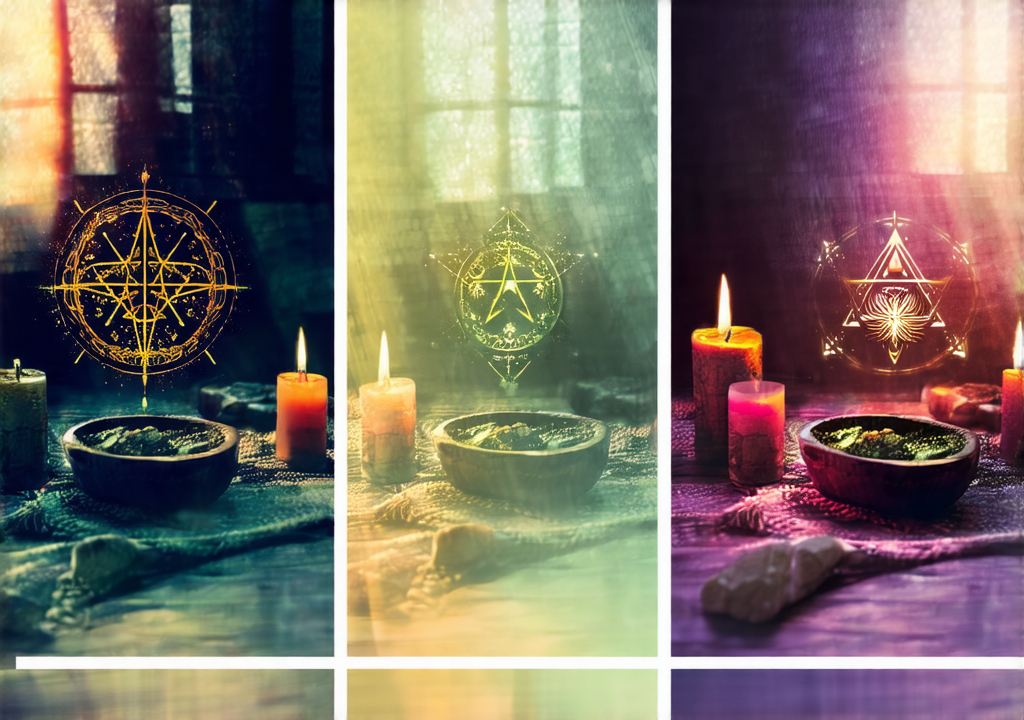
A Personal Narrative About One of Western Occultism’s Most Precise Traditions
I entered into a world where ritual was not decoration but architecture, where every gesture carried weight and every word carried power—because in ceremonial magic, precision matters as much as intention. This is the tradition I describe when I speak of high ritual: disciplined practice built on centuries of Western occultism, with roots stretching from medieval grimoires through Renaissance Hermeticism into the modern practices of practitioners like Dion Fortune, Israel Regardie, and contemporary masters who continue to refine the art.
The question wasn’t whether ceremonial magic would work for me. It was whether I could do it right. Having read widely—through Gerald Kremer’s definitive works on Western esoteric traditions, through Reginald Scot’s Discoverie of Witchcraft, through modern practitioners like John Dee and Edward Kelley—I knew what to expect: a system where form follows function, where the outer ritual mirrors inner transformation, where the magician becomes both actor and subject in a carefully constructed drama.
What Ceremonial Magic Actually Is (And Isn’t)
First, let me clarify: ceremonial magic is not folk magic. It is not herbal remedies or divination by candle flame alone, though these may appear within it. The tradition demands specificity—tools of precise definition, rituals executed with exacting timing, and a cosmology that maps the invisible onto the visible through symbol and geometry.
When I say “ceremonial,” I mean the full ritual package: consecrated tools (the pentacle, wand, athame, and chalice), precisely timed invocations, written prayers that echo centuries of tradition, and the practice of evocation—calling forth forces rather than merely invoking them within oneself. The word itself, from Latin ceremonia, carries with it both solemnity and structure. This is not casual magic but high ritual—the kind practiced in dedicated spaces, often called temples or chambers, where each object has been prepared according to its own specific rite.
Why I Chose Ceremonial Magic for Thirty Days
The thirty-day period was deliberate. Ancient as it was, the number carries weight: a month’s cycle gives time to observe patterns and establish habit without overwhelming either body or mind. My plan was straightforward—each day would involve ritual work at set hours, following traditional structure but allowing personal variation.
I chose to begin each morning with what I called my “Rising Sun” practice, where the golden hour of dawn became the optimal time for invocation, and I structured my evenings around the moon’s phase and planetary hour, drawing on works like Reginald Scot’s own observations about when spirits are most responsive, through contemporary practitioners who continue this tradition.
What Happened During Those Thirty Days
Week One: The Awakening of Practice
The first week was not marked by dramatic results but by something subtler: an increase in attention. In the early morning hours, as I performed my ritual work—drawing upon ceremonial traditions from Renaissance practitioners through modern masters—I noticed how every gesture carried weight beyond habit. The traditional practice of theurgy (divine working) became more than theory when I experienced it firsthand.
Week Two: Resonance
Around day twelve, something shifted that was both internal and external. During a particularly long morning session, where I had been following the traditional structure precisely—purification, invocation, meditation, and release—I felt an increase in concentration and focus unlike anything before. The practice of evocation (calling forth forces) became clearer than theory alone had promised.
Week Three: Integration
The third week brought integration—not just of practice into habit but of insight into daily life. I found that the same precision that applied to ritual also applied to how I approached problems, relationships, and creative work. The ceremonial tradition taught me something deeper about structure as a form of freedom rather than constraint.
What I Learned About Ritual Precision
What struck me most during those thirty days was how much difference precision makes in practice. Not only within the ceremony itself—where timing, posture, and breath each carry specific significance—but also outside it, where attention to detail becomes its own kind of discipline.
I learned that ceremonial magic is not about escaping reality but about ordering it—with intention rather than chaos, with purpose rather than habit alone. The tradition has always been about making conscious choices deliberate: choosing when to begin, how to begin, what tools to use and why, where in space and time to perform the ritual work itself.
What I Learned About Intent
What struck me most during those thirty days was that intent matters more than memorizing formulas. The traditional practitioners—from ancient times through Renaissance masters—understood this clearly: form follows function but also form is a kind of substance, something real in its own way. When you enter into ritual with clear intention and follow the structure precisely, you’re not merely performing ceremony—you’re participating in one that has been practiced for centuries, across many cultures.
The Practice That Lasted Beyond Thirty Days
I had started this experiment thinking it would end on day thirty. But something happened during those thirty days that made me want to continue—not out of obligation or routine alone but because I discovered that ceremonial magic works best when practiced consistently over time. The thirty-day period became a foundation rather than an ending, and now I find myself returning to ritual regularly: not every day necessarily, but often enough for practice to become habit, while still leaving room for spontaneity as well.
Final Thoughts on Ceremonial Magic
What remains is the discipline itself—the daily return to ceremony—and how that discipline shapes both inner life and outer world. I entered into a tradition where precision matters, where every gesture carries significance beyond itself, where ritual form follows from centuries of practice—but also where individual experience remains central. If you’re considering trying ceremonial magic yourself: begin by understanding what it is—that ancient practices remain alive in contemporary practice—and begin practicing with attention to detail and intention rather than habit alone.
The thirty days were not only about results but also about entering into a living tradition—a practice that connects us across centuries of human search for meaning, precision, and the sacred.


Recent Post


Gallery






Featured Videos





No Comments