


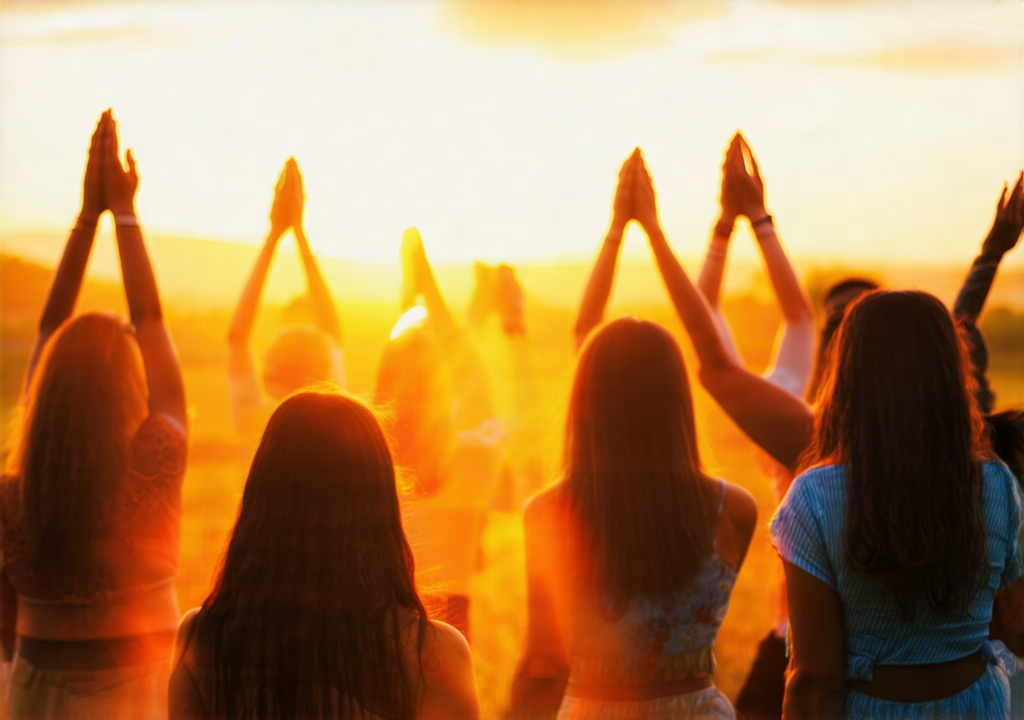
For the past few years, a quiet revolution has been unfolding in the cultural landscape, one that you might not notice if you’re simply passing by. It’s happening at bookstores, where old grimoires are finding new readers; in YouTube spaces, where practitioners demonstrate complex invocations with calm authority; and even on college campuses, where courses on Western esoteric traditions have proliferated. But what is driving this curious renaissance of ceremonial magic?
The truth may surprise you.
The Search for Substance in a Digital Age
Ceremonial magic—often called “high ritual”—is the practice of performing elaborate ceremonies designed to effect spiritual or physical change through carefully arranged symbols, incantations, and material preparations. Unlike simpler forms of divination, it involves precise timing, sacred geometry, specialized tools (the athame, wand, pentacle), and structured invocations of divine names. The tradition stretches back centuries, from the works of Agrippa von Nettesheim in the Renaissance to the Golden Dawn’s codification at the turn of the 20th century, through to modern practitioners like Dion Fortune, Aleister Crowley, and their contemporary successors.
What makes this resurgence so surprising is that it appears to be driven by something deeper than mere trend-following.
The Ritual Gap in Modern Life
Human beings have always been ritual creatures. Our ancestors marked birth, marriage, death, and seasonal transitions with elaborate ceremonies; they built temples aligned with celestial bodies and performed sacrifices according to precise formulae. But modern life has largely stripped away these structures, replacing them with digital calendars and quick convenience.
Ceremonial magic offers a return to structured meaning-making. It is not primitive belief in invisible forces—it is an intellectual tradition requiring discipline, study, and practice. The practitioner learns to read sacred geometry in circles and pentagrams; they memorize divine names from diverse traditions (Hebrew, Greek, Chaldean); they understand the planetary hours, zodiacal correspondences, and elemental associations that form the symbolic language of Western magic.
Why Now? Several Reasons Converge
Several factors have converged to make ceremonial magic suddenly relevant:
The Return to Craftsmanship: As digital life has become increasingly ephemeral and disposable, people are seeking activities that require real skill and physical presence. Ceremonial magic demands that you prepare your tools, arrange your space, move deliberately through prescribed patterns—nothing about it is passive or automatic.
Access to Ancient Knowledge: The internet has democratized centuries of accumulated wisdom. Where once a neophyte had to find a teacher or inherit an oral tradition, now any curious person can access the complete works of Agrippa, the writings of John Dee, and modern interpretations by figures like Stephen Skinner and Donald Krafft.
The Search for Depth: Particularly among younger people disillusioned with both religious fundamentalism and secular flatness, ceremonial magic offers a path that feels both ancient and intellectually rigorous—neither primitive nor purely theoretical.
The Mechanics of High Ritual
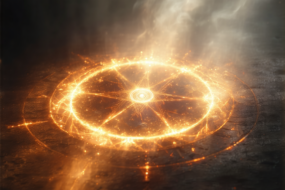
What distinguishes true ceremonial magic from casual occult interest is its precision. A properly prepared magical circle involves specific dimensions; the pentagram is drawn with exact proportions; the invocation requires memorized formulas spoken in their original languages (or modern translations that preserve their structure).
The ritual elements follow a carefully designed sequence: consecration of tools, purification and protection through elemental invocation, summoning of spirits or divine energies through named hierarchies, the working itself according to the chosen operation (whether it be healing, manifestation, exorcism, or communion), and finally dissolution—returning energy to its sources in proper order.
The Surprising Truth
The surprising reason ceremonial magic is flourishing right now? It offers a complete system for meaning-making that works on both intellectual and visceral levels simultaneously. Modern life leaves us with abundant information but scarce wisdom; abundant convenience but poor rituals of passage. Ceremonial magic provides structured practice that engages both mind and body, connecting practitioners to ancient traditions while remaining accessible through modern books, websites, and communities.
It is not primitive superstition masquerading as sophistication—it is a serious intellectual tradition with deep roots in Western esotericism and connections to mathematics, astronomy, chemistry (alchemy), and even psychology. Modern magicians know exactly what they’re doing: they are consciously participating in a tradition that stretches back through the Renaissance, the Middle Ages, and beyond—drawing on sources as diverse as the Hebrew Kabbalah, Greek neoplatonism, Egyptian magic, and Christian ceremonial practice.
What remains constant is this: when you perform a well-structured ceremony with proper timing and intention, something real happens—not because we “believe” in invisible forces, but because ritual action itself changes both practitioner and world through mechanisms we are still learning to understand.
The explosion of interest may seem sudden, but it was inevitable: given our cultural moment, ceremonial magic’s return felt not like a trend returning, but rather the first truly coherent spiritual option for those seeking something between the extremes of fundamentalist religion and secular materialism.


Recent Post
Gallery






Featured Videos




No Comments