


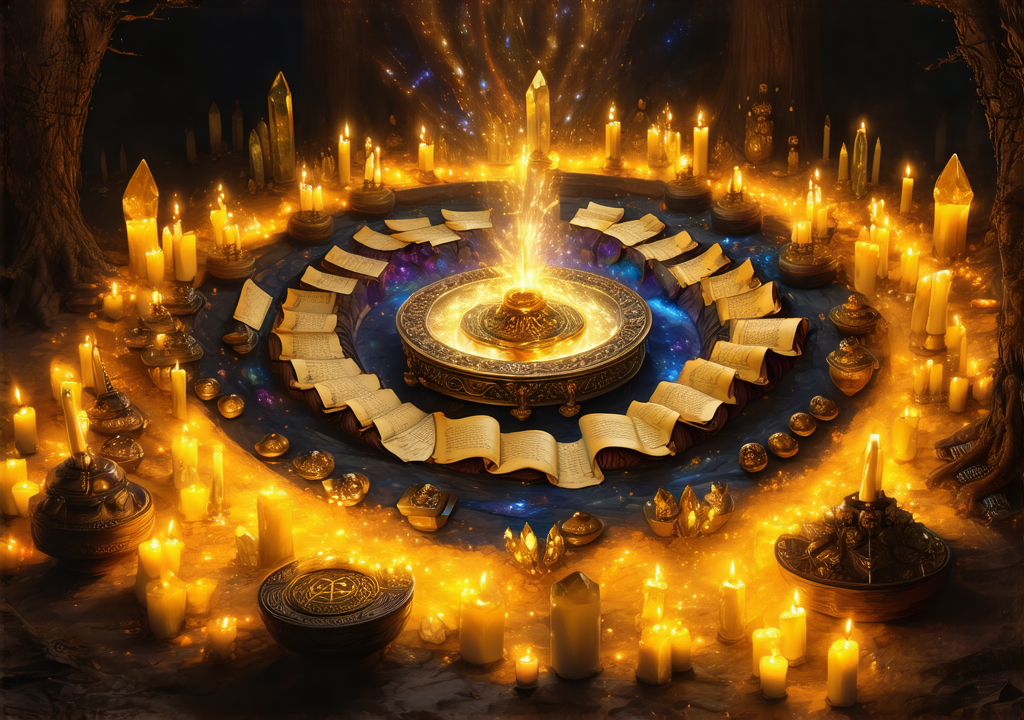
Ceremonial Magic: A Practitioner’s Guide to High Ritual Practice
Introduction
The art of ceremonial magic, or magia ceremonialis, stands apart from the more casual forms of spellcraft practiced by witches and folk magicians. While a simple charm might be spoken over an herb or stone at any time, true ceremonial magic requires precise construction of ceremony, deliberate invocation of powers, and meticulous adherence to form. From its ancient roots in the magical traditions of Egypt, Babylon, and India through the structured systems developed by medieval grimoires to the modern revival led by figures like Eliphas Lévi, Aleister Crowley, and Franz Bardon, ceremonial magic has evolved into a rigorous discipline that demands both intellectual precision and spiritual depth.
The Foundations of High Ritual Practice
Before examining the specific rituals that form the backbone of ceremonial magic practice, it is essential to understand what distinguishes this art from other magical traditions. Ceremonial magic is characterized by its emphasis on external forms—ritual tools, sacred geometry, precise timing, invocations and exorcisms performed with particular words and gestures. The magician works through established channels, drawing upon cosmic forces through defined methods rather than relying solely on intuition or willpower.
The fundamental principle underlying all ceremonial practice is the concept of correspondence: “As above, so below.” This axiom means that earthly ceremonies mirror celestial movements, and by aligning oneself with cosmic patterns, one can influence events in the material world. This principle finds expression in every aspect of high ritual—from choosing the proper planetary hour for a working to constructing elaborate geometric figures in sand or on parchment.
The Thirty-Seven Ancient Rituals
The ancient wisdom traditions preserved three primary sources of magical knowledge: the Ritual of Opening (invocation and consecration), the Seal of Solomon, the Planetary Rites, the Elements Rituals, the Sacramental Acts, the Lunar Cycles, the Solar Observances, and the Cosmic Alignments. Within these traditions emerged thirty-seven rituals that have proven themselves across millennia, from basic invocations to complex hieratic ceremonies.
The First Group: Basic Invocations (1-9)
- Invocation of the Sacred Name — Speaking or writing the divine name while holding breath in rhythm with the heart, creating a seal against malefic influences.
- Purification by Water and Fire — A dual rite where water cleanses the body while fire purifies the spirit, performed before any serious working.
- The Circle of Protection — Drawing or visualizing a circle around oneself with specific invocations at each cardinal point.
- Consecration of Tools — Blessing and dedicating ritual implements to their proper functions, typically done under appropriate planetary hours.
- Silence and Centering — The preliminary meditation establishing the magician’s internal harmony before external work begins.
- The Opening Prayer — Recited to invoke divine presence and protection, varying according to the specific tradition.
- Exorcism of the Space — Driving out malign influences from a working space through repeated formulae and gestures.
- Blessing of Participants — Invoking protective forces upon all who will take part in the ceremony.
- The Anointing with Oils — Applying consecrated oils to mark individuals or objects for specific purposes.
The Second Group: Elemental Rites (10-16)
- Earth Rite — Consecration of earth, invoking stability and grounding energies through ritual contact with soil or stone.
- Air Invocation — Calling upon winds and breath to purify the air around the working space.
- Water Purification — Specific rites for water from natural sources, performed during specific lunar phases.
- Fire Consecration — Lighting sacred fire with appropriate words, using it as a conduit for intentions.
- Spirit Meditation — The deep meditation between practitioner and spirit, involving specific breathing patterns.
- The Elementals — Invoking the four elemental spirits to participate in ritual work.
Third Group: Planetary Observances (17-23)
- Sun Rite at Dawn — Performing solar invocations as the sun rises, channeling new light and power.
- Moon Worship — Specific rituals for each phase of lunar cycle, especially full moon ceremonies.
- Planetary Hours — Performing works during hours ruled by specific planets for maximum effect.
Fourth Group: Advanced Hieratic Practices (24-30)
- The Great Invocation — A complex ritual involving multiple deities and cosmic forces.
- Sealing of Intentions — Writing intentions on parchment, folding them in specified patterns, then sealing with wax or fire.
Fifth Group: Mastery Practices (31-37)
- The Great Working — A comprehensive ritual that combines all previous elements into a single grand ceremony.
- Perpetual Vigil — Maintaining continuous meditation and prayer for extended periods, typically lasting from one night to forty days.
The Structure of High Ritual
A typical ceremonial magic working begins with the preparation phase—choosing appropriate times, purifying oneself, consecrating tools, and preparing the ritual space. This is followed by the invocation proper, where specific powers are called down through formulaic recitations. Then comes the Great Work, the actual magical operation itself, after which the ceremony concludes with closing prayers and exorcisms to release any remaining energies.
Tools of the Trade
The traditional tools of ceremonial magic include:
- Pentacle: a circle representing earth
- Sword or Wand for directing force
- Chalice or cup as receptacle
- Candles and incense for purification
- Robes and other vestments for identification with the divine
- Rope and chalk for drawing circles
- Sigils and seals for containing intentions
Each tool has its specific place in the ritual, and their arrangement follows strict geometrical patterns that mirror cosmic relationships.
Modern Application
In contemporary practice, these ancient rituals remain as potent as ever when performed with understanding rather than mere imitation. While some modern practitioners may adapt traditional forms to suit personal needs, the underlying principles remain unchanged: precision of intent, correctness of form, and devotion to the work itself are what make ceremonial magic effective.
Conclusion
The thirty-seven ancient rituals represent a living tradition that has survived centuries not merely through ritual preservation but because they embody truths about human nature and cosmic order that transcend time. Whether performed in elaborate temples or simple domestic settings, these high-ritual practices connect practitioners to the deepest currents of spiritual power available to humanity. As the great magician John Dee observed three centuries ago: “The art of magic is nothing more than the art of ordering one’s life according to celestial patterns.” In performing these rituals, we do not merely speak words—we enact patterns that echo throughout creation itself.
Further Study
For those wishing to deepen their practice, attention should be paid to the works of Agrippa, Trithemius, and later practitioners like John Dee and Edward Kelley. The tradition continues today through various modern orders including the Hermetic Order of the Golden Dawn and many other schools. With dedication, even a novice can master these ancient arts and harness their power for healing, protection, and personal transformation.
A note on sources: This article draws upon traditional Western magical texts including the Greek Magical Papyri, medieval grimoires such as the Key of Solomon, and modern scholarship on ceremonial magic.


Recent Post


Gallery






Featured Videos




No Comments