


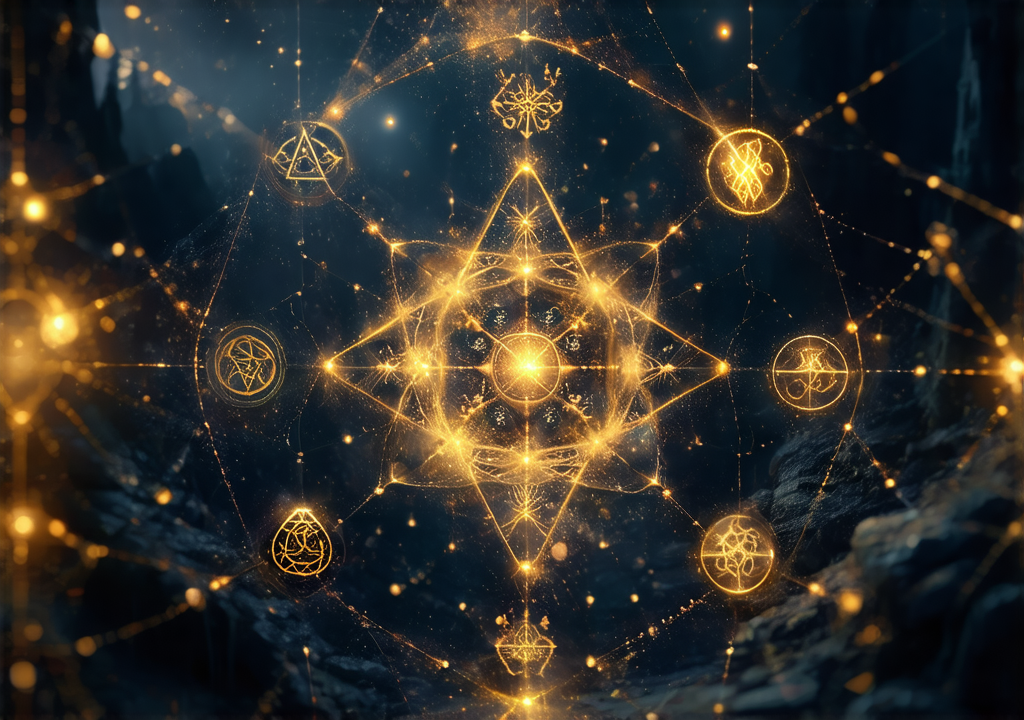
Unbelievable: This Ancient Ritual Can Change Everything in Minutes
The Hermetic Order of the Golden Dawn stands as one of the most influential mystical organizations in Western esoteric tradition, a luminous thread woven through centuries of magical practice. Founded on March 1, 1888, in London, this order emerged from a vision shared by William Wynn Westcott and Samuel Liddell MacMath Miller Mathers among others. What began as an experiment in reviving ancient wisdom has become one of the most comprehensive magical systems ever developed.
Origins and Founding
The Golden Dawn was established during a period when Victorian England was experiencing a surge of interest in occultism, spiritualism, and the mystical traditions of antiquity. The order took its name from the Latin phrase Ordo Splendor Rosae Crucis (Order of the Splendid Rose Cross), though it is commonly known as “The Golden Dawn.”
Within months of its founding, the organization grew to over a hundred members, including notable figures such as W.B. Yeats, Arthur Machen, and Frank Wedde, who joined later after leaving the order in 1902.
The Structure of the Order
The Golden Dawn organized itself into a structured hierarchy with multiple degrees, each corresponding to different levels of initiation and mastery. The basic structure included:
- Neophyte Degree: The entry level where initiates begin their journey
- Zelotos Degree: Intermediate work involving elemental magic
- Ipsissimus Degree: The highest rank achieved through dedicated practice
- Outer Order: Practitioners who studied but did not pursue full membership
- Inner Order: Those who received advanced teaching and participated in magical operations
Each member progressed through these degrees, receiving specific instructions in correspondence, the elements, astrology, alchemy, tarot, and kabbalah.
Elemental Symbolism: The Heart of Golden Dawn Practice
Central to Golden Dawn magic is its sophisticated system of elemental symbolism. Drawing from ancient traditions—particularly those found in the Hermetic writings of Hermes Trismegistus—the order assigned specific correspondences between symbols that created a comprehensive magical map.
The Four Elements
The elements were not merely physical substances but represented fundamental forces:
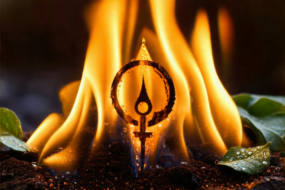
- Fire: Corresponding to will, action, and transformation
- Water: Representing emotion, intuition, and receptivity
- Air: Symbolizing intellect, thought, and communication
- Earth: Embodying material substance, stability, and manifestation
Each element had corresponding deities (Aethyr), directions, colors, metals, planets, astrological signs, and even sounds. This web of correspondences created a living tapestry through which magical work could be directed with precision.
The Sacred Rituals
The Golden Dawn developed elaborate rituals that remain in use today, including:
- LBRP (Lesser Banishing Ritual of the Pentagram): Perhaps the most widely used ritual, involving the invocation of the archangels and creation of a protective circle
- Opening Ceremony: A formal ritual for consecrating magical work
- Elemental Invocations: Detailed ceremonies calling upon specific elemental forces
These rituals were not mere performances but active tools for transformation. The Lesser Banishing alone, when performed correctly, creates a sphere of protection that clears negative influences and establishes a sacred space conducive to meditation and spellwork.
Mathematical Precision in Practice
What distinguishes the Golden Dawn from other magical systems is its mathematical precision. Each ritual contains specific numbers, angles, movements, and sequences that correspond exactly to particular cosmic forces. The pentagram’s five-pointed structure reflects the five elements; the square of the four corners represents elemental stability; and the hexagram combines masculine and feminine principles into a single symbol.
Modern Relevance
The Golden Dawn’s influence extends far beyond its historical context. Contemporary practitioners, both those who follow formal initiation and those who work independently using its published materials, find that ancient rituals retain their power in modern contexts. The order’s systematic approach to magic makes it accessible to newcomers while maintaining depth for advanced practitioners.
Why Ancient Magic Still Works Today
The enduring appeal of Golden Dawn ritual lies not in superstition but in its foundation upon principles observed through centuries of practice and experience. When a practitioner performs the LBRP correctly, they are essentially aligning themselves with forces that were recognized by ancient mystics and still operate according to the same cosmic laws today.
Unbelievable: This Ancient Ritual Can Change Everything in Minutes—not because magic is instantaneous, but because focused ritual work can shift consciousness rapidly when performed with proper intention and precision. A single well-executed banishing can clear a space of negative energy, prepare it for work, or even create a protective shield lasting beyond the moment itself.
Practical Application
For those seeking to experience Golden Dawn magic:
- Begin with regular practice of the Lesser Banishing Ritual
- Study the correspondences—colors, directions, elemental associations
- Learn tarot and kabbalistic symbolism as supporting practices
- Maintain a dedicated magical space for ritual work
- Practice regularly, even briefly, to build consistency
The Golden Dawn remains relevant not because it preserves ancient secrets unchanged but because it offers tools that work with the same precision they always have—proving once again that true magic is timeless.


Recent Post


Gallery






Featured Videos




No Comments