


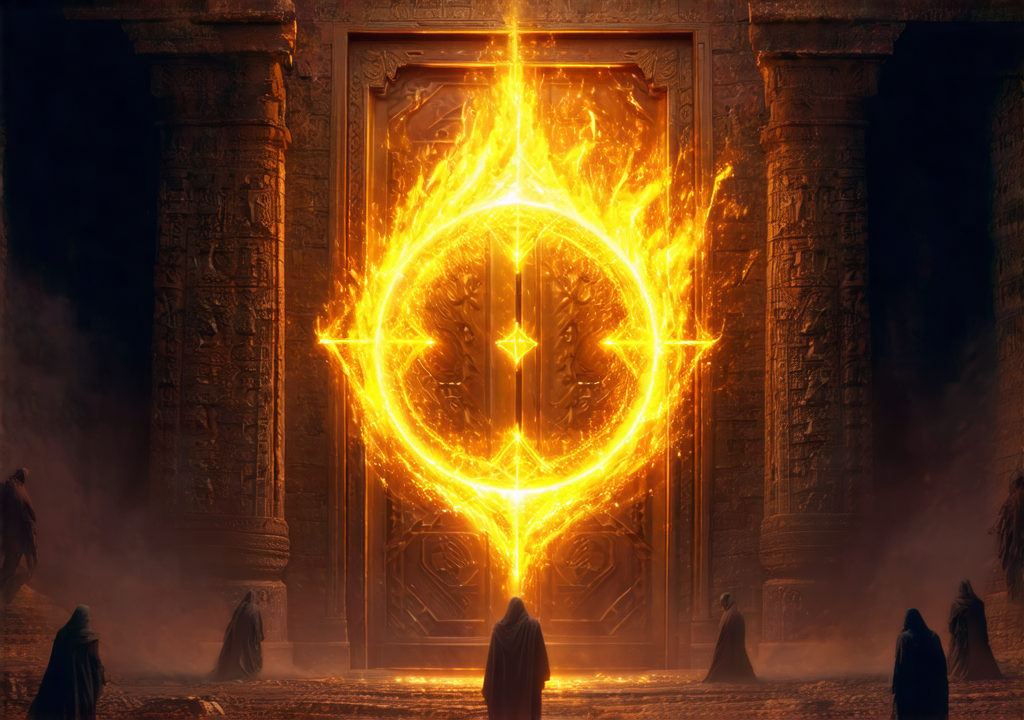
In the hallowed halls of Hermetic tradition and within the mystical embrace of the Golden Dawn system, we find one of the most profound discoveries in ritual magic: the ability to command the elemental forces of nature through symbolic correspondence. At its core lies a beautifully intricate framework that connects symbols, elements, directions, colors, and divine names into an elegant tapestry of magical understanding.
The Sacred Foundation
The Golden Dawn, formally known as the Hermetic Order of the Golden Dawn, established itself in 1887 as one of the most influential esoteric organizations in Western occultism. While its origins are steeped in Victorian-era occult revival, the system draws from far older traditions—Kabbalistic thought, alchemical principles, and the ancient practice of elemental invocation that traces back to Egyptian mystery schools and even further.
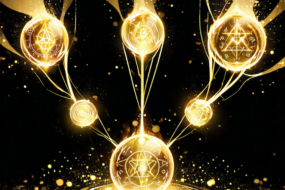
At the heart of this tradition stands a symbol—a complex geometric arrangement of lines, circles, and cross shapes—that serves as both a cosmogram (a map of cosmic forces) and a tool for meditation. This sacred geometry represents the interplay between spirit and matter, heaven and earth, divine and human—the very substance from which all creation emerges.
The Four Elements: Foundation of All Magic
Before we can understand how this ancient symbol works in practice, we must first grasp its elemental foundation. The Golden Dawn system recognizes four primary elements—Fire, Water, Air, and Earth—each possessing distinct qualities that correspond to different realms of experience:
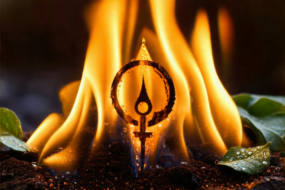
Fire governs transformation, willpower, and the dynamic force that burns away impurities. Its color is red, its direction south, and it corresponds to divine inspiration and spiritual elevation. Fire operates through action and passion—the spark that ignites intention into manifestation.
Water embodies emotion, intuition, and the receptive feminine principle. Associated with blue hues and the eastern direction, water flows between all things, carrying messages and connections. It represents the subconscious mind, dreams, and the hidden currents beneath conscious awareness.
Air carries thought, intellect, and communication across boundaries. Its colors range from pale yellow to white, and it occupies the western position. Air connects disparate elements through breath—the invisible medium that allows spirit to express itself in form.
Earth grounds all manifestation in material reality. Colored green or brown and positioned in the west (or sometimes southeast depending on tradition), earth provides stability, fertility, and the foundation upon which all things rest. It is where intention becomes substance.
How the Ancient Symbol Works in Practice
The symbol’s operation relies on what practitioners call “correspondences”—the recognition that certain symbols carry specific energetic patterns that can be invoked during ritual work. When a magician visualizes the appropriate geometric figure, traces its lines with breath and intention, or places it before them during meditation, they establish an energetic connection between their will and the forces represented by that symbol.
The most commonly encountered form of this symbol in Golden Dawn practice is the elemental pentangle or cross arrangement found within the Qliphothic Tree of Life diagram. Here we see three intersecting lines—the vertical axis connecting spirit to matter, the horizontal bridge between masculine and feminine principles—creating a crucible where transformation occurs.
Within these geometric boundaries live the four elemental signs: the alchemical triangle for Fire, the crescent moon symbol for Water, the lightning bolt for Air, and the triangle with a cross within it for Earth. Each carries specific vibratory signatures that practitioners can learn to perceive and manipulate through meditation, breathwork, and focused visualization.
The Mechanics of Elemental Invocation
When working with this ancient symbol in actual practice, several principles come into play:
First comes directional awareness. As each element occupies its proper direction (Fire South, Water East, Air West, Earth North), the magician positions themselves accordingly or draws directional lines during ritual. This creates a microcosmic map that mirrors the macrocosmic arrangement of forces.
Second is breath and voice. The Golden Dawn system emphasizes the use of spoken syllables—particularly those connected to divine names—to activate specific elements. When you speak a name like “Yah” or “Ain Soph Aur” while visualizing its corresponding color, direction, and symbol, you begin to manipulate that particular element within your personal energetic field.
Third is visualization. Beyond mere seeing-with-the-mind’s-eye, practitioners learn to project mental images into the symbolic space before them, making these visions palpable and real in their experience. The ancient symbol becomes not just an image but a living entity through sustained attention.
Modern Applications and Timeless Relevance
What makes this system remarkable is its adaptability across centuries of magical practice. Whether you’re casting elemental wards, performing daily meditations on the four directions, or conducting elaborate ritual workings during seasonal festivals like solstices and equinoxes, the golden symbol remains central to the process.
The ancient symbol’s power lies not in any mystical secret hidden within its lines, but rather in the way it engages human consciousness itself—our natural capacity for seeing patterns, connecting symbols, and projecting intention outward through focused attention. In a world where much feels chaotic and disconnected, this simple geometric arrangement offers grounding and clarity: four forces, beautifully balanced, waiting to be awakened through practice and understanding.
Through disciplined work with these correspondences, practitioners report experiencing enhanced creativity, deeper connection with nature’s rhythms, increased emotional balance, and the ability to manifest intentions more effectively in daily life. The ancient symbol holds its key simply because it mirrors what is already true within us—the interplay of spirit and matter, intention and action, thought and substance—all waiting for us to recognize our own elemental nature.


Recent Post

Gallery






Featured Videos




No Comments