


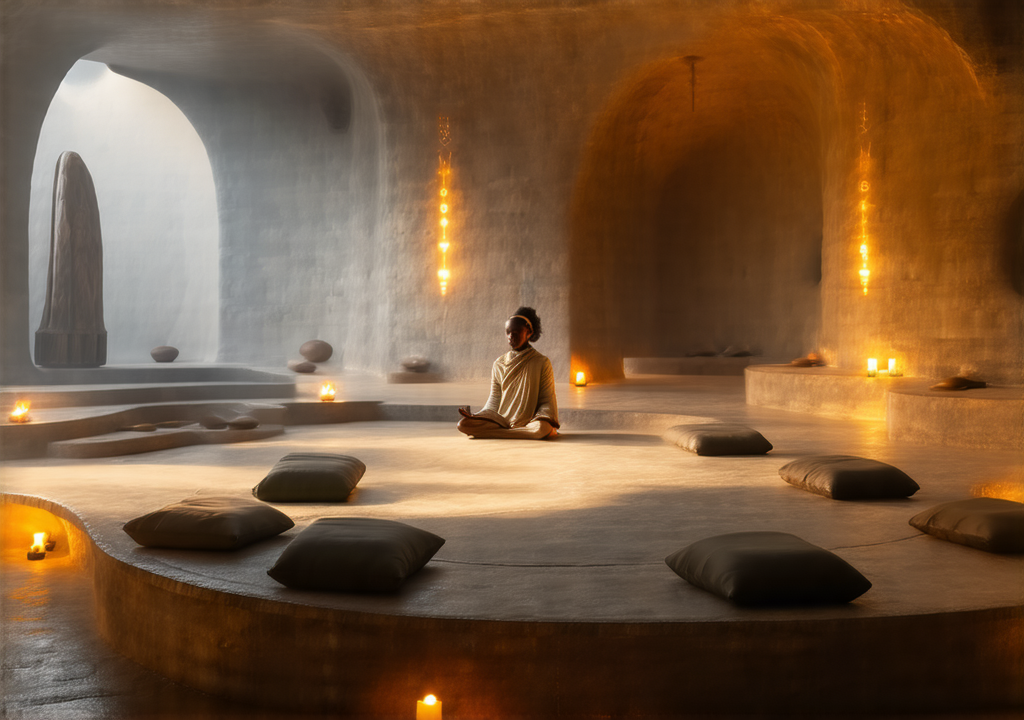
For thousands of years, humanity has been told that meditation is the path to enlightenment. Whether through sitting cross-legged on a cushion in silence, chanting mantras, or practicing mindful awareness, millions have committed their lives to this contemplative discipline. But what if they’ve been sold a bill of goods? What if true transformation requires not quiet reflection but active engagement with reality?
Aleister Crowley’s Thelema — often misunderstood as merely “do what you will” — offers a radically different approach to spiritual development, one that challenges the very notion of meditation as we traditionally understand it. According to Thelemic philosophy, instead of meditating away from the world, we should be engaging with it directly, transforming our Will into action rather than contemplating it in isolation.
What is Thelema?
The word “Thelema” comes from Greek and literally means “will.” Crowley identified this concept not as blind impulse or arbitrary desire, but as one’s true purpose — what he called the True Will. Every person has a specific function to fulfill in life, a unique contribution they’re meant to make. When we align with this Will, we experience what Crowley described as ecstasy: not merely pleasure but the ecstatic state of being fully alive and fully ourselves.
Why Meditation May Not Be Enough
Traditional meditation aims at clearing the mind, achieving inner peace, or transcending the physical world altogether. But Thelema presents a different goal: expression rather than transcendence. Crowley himself was famously active — he traveled, wrote extensively, practiced magick in its full sense of directed will, and pursued his work with tremendous energy.
The problem with passive meditation, from a Thelemic perspective, is that it can become an escape rather than preparation. Meditation becomes another form of contemplative withdrawal from the real world. When we spend hours in silent contemplation, we may find our minds clearer but our lives unchanged. We meditate on peace without becoming peaceful; we meditate on love without expressing it.
The Real Work: Act According to Your Will
So what should you do instead of sitting still? Act. And not just any action — act in accordance with your True Will. This is where “Do what thou wilt” becomes practical rather than abstract. It means discovering what drives you at your deepest level and pursuing it with full commitment, regardless of external expectations.
Crowley described Thelemic practice as involving all the senses: Taste and touch, smell, hearing, and vision — each engaged fully in experiencing reality without mental filters. This is fundamentally different from meditation’s inward turn; Thelema turns outward into full contact with existence.
Magick: Action-Based Spirituality
The word “magick” (with a ‘k’ to distinguish it from illusion) refers specifically to the Science and Art of causing Changes in Conformity with Will. This is not mystical otherworldliness but deliberate, purposeful action — the exact opposite of passive contemplation. Every meal, every conversation, every creative act can become magick when done according to one’s True Will.
Notice how Crowley spells “magick” differently from “magic.” The distinction matters: magic implies enchantment and wonder; magick implies work — the deliberate application of will to bring about specific results. This is not passive receptivity but active creation, which is precisely what Thelema prescribes instead of meditation.
How to Apply This Instead of Meditation
- Discover your True Will through self-examination and experimentation. What makes you lose track of time? What drives you even when no one is watching? What would you pursue if money were no object?
- Practice magick daily — small acts that express your will rather than large, dramatic gestures. Write a letter with full attention, cook deliberately, walk mindfully through nature, create art without purpose other than expression.
- Engage the senses fully instead of retreating from them. Taste food completely, listen deeply to music, touch what interests you, look at things until they reveal their character.
- Take responsibility — this is perhaps the hardest part. When you act according to your Will, you cannot blame others for your failures or successes. Everything becomes yours.
- Celebrate — Crowley described Thelema as a joyful path. Ecstasy arises from full engagement with life, not from transcending it.
Practical Examples
Consider two people both seeking spiritual growth: one sits meditation every morning for an hour, the other spends that hour writing poetry or practicing magick according to their Will. According to Crowley’s system, which is more authentic? The answer depends on whether they align with their True Will — not external expectations about what spirituality should look like.
Crowley himself rejected traditional religious forms in favor of active, personal engagement with the divine. He called his approach Apophatic — not through negation but through affirmation, saying yes to life rather than denying it in pursuit of purity.
The Verdict
So forget meditation for a moment. Instead of sitting still contemplating reality, step into it and act according to your True Will. Whether that means writing, dancing, loving, creating, or exploring — the choice is yours because you are the one choosing. And that making of your own choice, fully conscious and responsible, might just be the greatest act of magick there is.
Thelema’s message remains as powerful today as when Crowley proclaimed it: Do what thou wilt shall be the whole of the Law. Not a rejection of contemplation but its transformation into something far more dynamic — not passive meditation but active magick, not withdrawal from the world but full engagement with it.


Recent Post


Gallery






Featured Videos








No Comments