


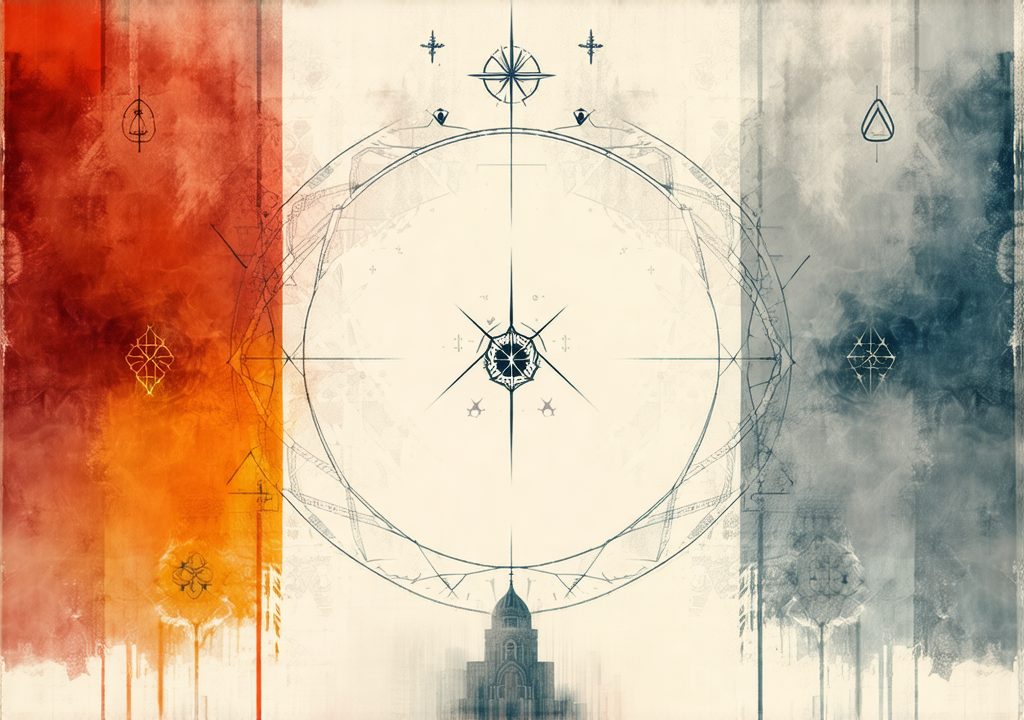
For centuries, humanity has been told how to practice spirituality: through devotion, prayer, obedience, and the disciplined suppression of desire. Ancient traditions taught that enlightenment came from surrendering ego, conforming to sacred law, and seeking union with a higher power outside oneself. But what if these foundational assumptions were wrong? What if true spiritual realization comes not from submission but from self-discovery; not from following others’ prescriptions but from discovering your own unique path?
This is precisely the radical claim of Thelema — one of the most provocative and misunderstood movements in modern Western esotericism. Founded by Aleister Crowley in 1904, Thelema represents a paradigm shift so profound that it has earned Crowley’s own nickname: “The Great Beast.” Far from being merely a mystical philosophy or occult religion, Thelema is a complete reimagining of how human beings relate to the universe and their own nature.
What Is Thelema?
At its core, Thelema centers on one phrase that has become one of the most quoted passages in modern esoteric literature: “Do what thou wilt.” But this injunction, which Crowley claimed was revealed to him through a mystical text called The Book of the Law, is often misunderstood. It does not mean “do whatever you want” in the casual sense. Rather, it points toward discovering your True Will — your fundamental purpose, the unique task upon each soul arrives incarnate for no other reason.
Crowley received this revelation during a stay at the Cairo hotel in 1904, where he wrote down The Book of the Law under what he called the influence of a mysterious entity named Hoor-paar-aaat. The text became known as Liber Legis, and it established three key principles: “Do what thou wilt shall be the whole of the Law,” “Love is the law, love under will,” and “Every man is a star.” These propositions suggest not merely individualism but something more subtle — that each person’s True Will is part of the cosmic order, and that fulfillment comes from discovering and expressing this unique pattern rather than following external prescriptions.
The Disruption
Traditional spirituality tends to emphasize asceticism, discipline, and conformity to sacred law. Many religions teach that humans must overcome their base desires, purify themselves through ritual, and align with divine commandments revealed by prophets or priests. Christianity demands humility; Buddhism teaches detachment from desire; Hinduism prescribes dharma (duty) as the path to liberation.
Thelema turns this on its head. It asserts that desire is not an obstacle to spiritual realization but rather its very expression. Crowley argued that genuine spirituality comes not from suppressing our nature but from understanding it — and then channeling it according to our unique constitution. His famous statement that “Every man is a star” suggests that each individual contains within themselves the full potential of cosmic significance.
The Holy Book of the Law
The central text of Thelema, Liber Legis, divides into three chapters corresponding to different divine principles: Nuit (the infinite cosmos), Hadnephis (the sun god), and Ra-Hoor-Khuit (the crowned & conquering figure). Each chapter builds upon the last, presenting a vision where human beings are not subjects of gods but participants in cosmic processes.
The text speaks of a new aeon — what Crowley called “the age of Hoor-paar-aaat” following the previous ages ruled by Isis and Osiris. This new era is characterized by self-realization rather than devotion, individual discovery rather than collective worship. In this vision, traditional religious figures are not discarded but reinterpreted: Christ becomes a symbol of will; Jesus’s teachings are seen not as universal commandments but as expressions of his own True Will.
Thelema and Modern Life
What makes Thelema particularly relevant today is its practical orientation. Unlike many spiritual systems that require elaborate practices or long-term commitments, Thelema offers a method that can be applied immediately. Crowley described it as “the Science and Art of appealing to the superconscious soul” — essentially, learning to identify what you truly want and then aligning your actions accordingly.
The practice involves several key elements:
- Magick (Crowley’s spelling of magic) as the method for discovering and fulfilling one’s True Will
- Energy management through practices like meditation, yoga, and ritual
- Self-knowledge as the primary tool for spiritual growth
- Service not as duty but as expression of one’s unique purpose
The Rejection of Orthodoxy
One reason Thelema has been both popular and controversial is its deliberate rejection of traditional religious authority. Crowley positioned himself not as a prophet delivering divine truth but as an initiate who had discovered something that any person could verify through their own experience. He famously declared, “Truth is the whole man.” Rather than accepting propositions on faith, he insisted on verification — on testing spiritual claims against personal experience and finding one’s own confirmation.
This approach has influenced countless modern movements, from new-age thinking to contemporary magickal orders like the Ordo Templi Orientis (OTO), which Crowley helped shape into a major esoteric organization. The disruption that Thelema represents is not merely in its claims but in its method: it invites each person to become their own spiritual authority.
Why It Matters Now
As traditional religious institutions struggle with relevance, as people increasingly seek personal meaning over inherited belief, and as Western culture moves toward what some call the “age of individualism,” Thelema’s central claim resonates powerfully: that spirituality should be about self-realization rather than obedience; that our deepest desires are not distractions from spiritual life but expressions of it; that each person carries within themselves a unique pattern waiting to be discovered.
The disruption Thelema represents is ultimately an invitation — to stop following someone else’s map and start exploring the territory yourself, to recognize that your will is not something to be subdued but something to be understood and expressed, to discover that spirituality need not mean renunciation of this world but engagement with it on your own terms.
The question Thelema poses is not what you should believe about God or the soul or the afterlife — but who you are, what you truly want, and how to live accordingly. It’s a question as old as philosophy itself, asked in a new way: Forget everything you know about spirituality. Now discover something far more interesting.


Recent Post


Gallery






Featured Videos






No Comments