


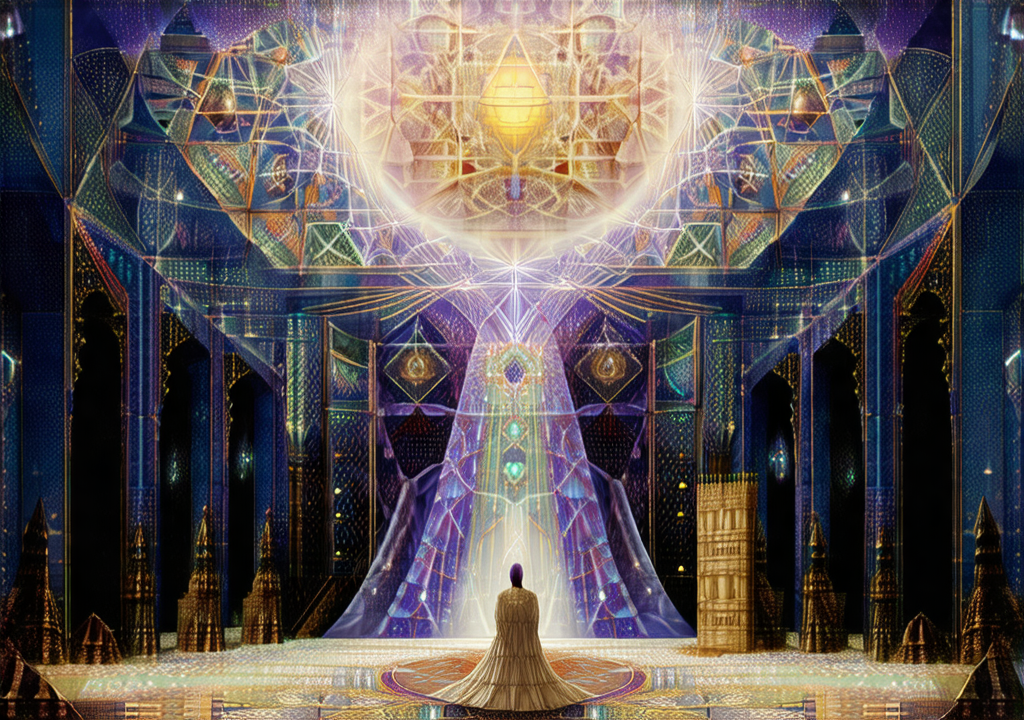
Imagine, if you will, that there exists a hidden dimension woven beneath the fabric of ordinary perception—a dimension where letters are not merely symbols but living entities, where numbers pulse with meaning, where every leaf, every breath, every heartbeat carries an encrypted message from the infinite. This is Kabbalah: not as academic exercise or religious dogma, but as a living art, a method for reading the world’s hidden script and participating in its unfolding mystery.
For centuries—perhaps millennia—the term has conjured images of mystical scrolls, ancient Sephardic scholars haggling over Hebrew grammar, and cabalistic talismans hanging above doorways. But what I offer is something far more immediate: Kabbalah as a direct encounter with the hidden life within language itself, rendered through a modern lens that honors its deepest roots while speaking to contemporary seekers who have not yet surrendered their curiosity.
What Is Kabbalah, Really?
At its heart, Kabbalah is a reading practice—a way of engaging letters and words as if they were living beings with inner lives, histories, and secrets to reveal. Unlike conventional interpretation, which seeks meaning about the text (what it means), Kabbalah seeks meaning within the text (what the text itself has to say). The word “Kabbalah” itself suggests this inward turn: קבלת (kabbalah) comes from the root קבל—to receive, to accept. It is not about imposing one’s own interpretation upon a passive text; it is about learning to receive what the text offers in return.
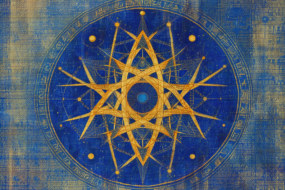
The ancient Jewish tradition understood Kabbalah as a comprehensive worldview—a way of perceiving reality itself as encoded with divine letters and numerical patterns. The so-called “Tree of Life” that appears on amulets, synagogues, and mystical diagrams was never merely decorative; it was considered a map of existence itself, showing how the infinite (Ein Sof) expresses itself through ten emanations—the Sefirot—that correspond to every level of being, from the most abstract cosmic principles down to human experience.
How Kabbalah Differs From What You Know About It
Most people have heard of Kabbalah, but few understand its actual practice. They think it’s about tarot cards and crystal balls or about reading palm lines while wearing a velvet robe. But genuine Kabbalah is not fortune-telling—it’s more like the ancient art of gematria (numerological reading) combined with sophisticated literary techniques for uncovering hidden meanings.
Gematria treats letters as numbers: א (Aleph) = 1, ב (Beth) = 2, and so on through twenty-two Hebrew letters. The word “chayim” (life), when added up, yields the same total as “nechemah” (comfort). Not coincidence, but resonance—proof that life and comfort share a hidden equivalence in the cosmic scheme.
Kabbalah also uses gilgul (letter cycling) to rearrange letters within words, creating new meanings from old texts; it applies notarikon (acronym reading), drawing out hidden messages from the first or last letters of consecutive words; and it employs ge’zerah shavah (equal decree) methods that link seemingly disparate passages through shared linguistic patterns.
None of this is mystical in an airy, ethereal sense—it is intensely intellectual. It requires precision: every letter counts, every arrangement matters.
The Secret About Reading Texts in Kabbalah
What makes Kabbalistic reading unique—and why it might seem strange to those accustomed to modern interpretation—is its assumption that language itself carries meaning internally. Unlike the way we usually read a novel or article (finding the author’s intended message), Kabbalists assume texts can be read through—a word, a passage, even an entire book—until something emerges on the other side.
This is not merely “interpretation.” It is more like what happens when you turn a photograph upside down: suddenly new faces appear, new patterns emerge from what was previously opaque. Kabbalists do this to sacred texts—but they have also applied it to everyday language, poetry, mathematics, and even the structure of the universe itself.
Why You Might Want To Know More About Kabbalah
Consider how differently you might view a sentence when you know that Hebrew letters are not arbitrary symbols but living entities—each one possessing an inner life, a unique quality, and a connection to cosmic forces beyond human comprehension. Consider what happens when a single word in a prayer is rearranged according to gematria rules—and suddenly reveals something entirely new about its meaning.
Kabbalah does not require you to believe anything specific, nor does it demand adherence to any particular theology. You might approach it as a method of reading; or as a way of perceiving hidden patterns; or—as many Kabbalists have done—you may simply allow the practice itself to open whatever door your mind is ready to enter.
The Invitation
Don’t let comfort keep you from this encounter. Don’t read about Kabbalah merely as an intellectual exercise or a curious footnote in religious history. Read it as a living art—one that has preserved itself through centuries of scholars, practitioners, and seekers—and one that still speaks with immediacy to anyone willing to look closely at language and world.
The question is not whether you will find meaning in Kabbalah but whether you are prepared to receive it when it arrives. Because once you begin reading the hidden script, something shifts—perhaps subtly at first, then with growing clarity—and before long you will be seeing a world that has always been there, waiting patiently for your attention.
The text awaits. Are you ready to read it?













No Comments