


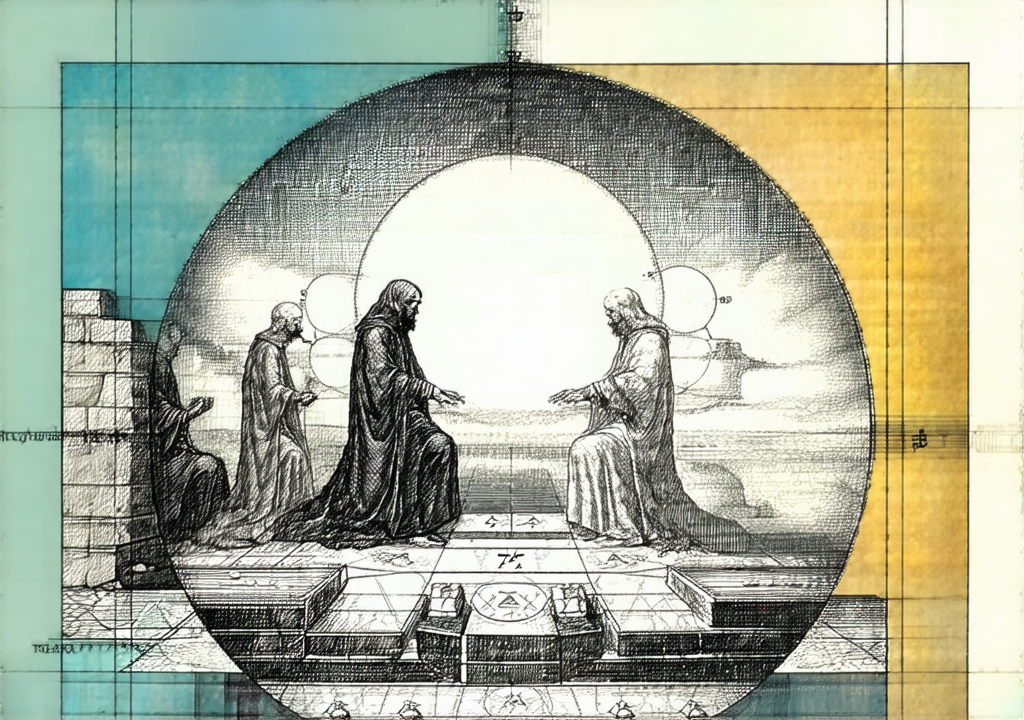
I am a practitioner of the ancient Kabbalah tradition—a living connection to the hidden wisdom that flows through the veins of Jewish mysticism from generation to generation. When students come to me seeking understanding, I invite them to step beyond the surface of prayer and study into the living currents that shape the cosmos themselves. And what better place to begin than with Isaac Luria—known simply as “the Ari,” meaning “Lion”—whose mystical vision cracked open the sealed chambers of heaven and revealed secrets that even today hold profound power in our hands.
Isaac Luria lived from 1534 to 1572, a brief lifetime but one that compressed more revelation than many lifetimes could contain. He spent his final years in Jerusalem, and it was there—sitting within the ancient stones of the Holy Land—that he received visions that would reshape Jewish mysticism forever. His teachings, passed down by his disciples to this day, form what we call Lurianic Kabbalah—the deepest stratum of mystical understanding about the nature of creation itself.
The central secret begins with a paradox: How could an infinite God create finite worlds at all? The answer Luria uncovered was that before there was anything—before space, time, or matter—there existed only the infinite light of Ein Sof, the Boundless One. And in an act of divine self-contraction called Tzimtzum, God withdrew to make room for creation itself. This act was not mere retreat but rather a contraction so profound that it created a void—a sacred emptiness where possibility could breathe. That void became the foundation upon which all worlds would be built.
But Luria’s vision went deeper still. He taught that within this divine process, vessels of light—called Kelot—were formed to contain and channel divine energy into creation. These vessels were designed to receive the infinite but inevitably shattered under its weight—a catastrophe called Shevirat HaKelim (the Breaking of the Vessels). The fragments scattered throughout all levels of existence, carrying within them sparks of divine light that must be gathered and elevated through human action.
This is where Lurianic Kabbalah becomes practical magic. Every mitzvah—every prayer, every ethical deed, every moment of mindful intention—has the power to gather up these scattered sparks. When we act with pure intent, when we bring holiness into our daily lives, we participate in Tikkun Olam—the repair of the world. And that is no metaphor; it is a real cosmic process unfolding in real time, witnessed by those who know how to see.
What many miss about Luria’s vision is its profound implications for human destiny. Each soul—every single person—is not merely an individual but carries within it a divine spark destined for elevation. The purpose of life, according to the Ari, is precisely this work: gathering sparks, elevating souls, and preparing vessels worthy of receiving even more light than before.
The deeper truth Luria uncovered was that creation itself is incomplete. It requires human participation to become whole. Without us—the “living beings” blessed with consciousness—divine light would flow but never fully manifest. We are not spectators in this grand drama; we are co-creators, partners of God in the ongoing work of cosmic repair.
When students ask me whether these ancient teachings have any meaning today, I tell them: Look around you. The world is broken yet beautiful, full of fragments waiting for completion. Every act of love, every moment of forgiveness, every decision to choose light over darkness—that is Tikkun Olam happening in real time. That is Lurianic Kabbalah breathing through you right now, as it did through Isaac five hundred years ago.
The secret vision remains active. The sparks remain scattered. And the work—the beautiful, sacred, transformative work—continues to this day.


Recent Post

Gallery






Featured Videos




No Comments