


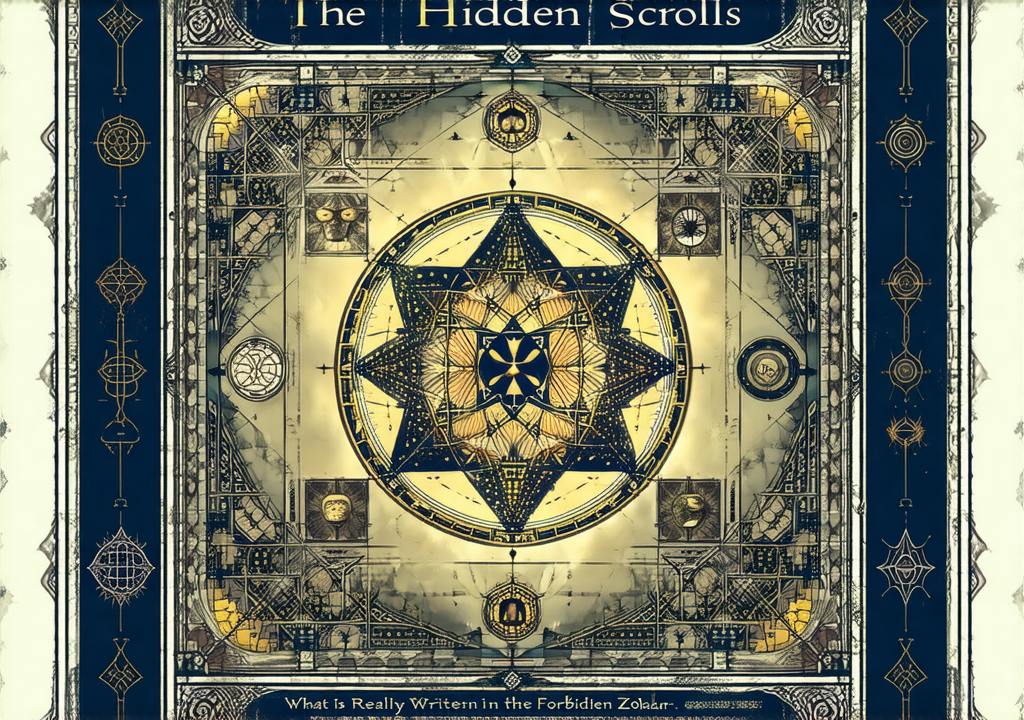
Greetings, seeker of wisdom. I am a student and teacher of Kabbalah, one who has spent years communing with ancient texts under candlelight, searching for that spark of divine truth hidden between the lines. Today I share with you something precious—something that has been preserved by the great masters throughout the ages.
What Is the Zohar?
The Zohar, meaning “Splendor” or “Radiance,” is considered one of the most profound mystical texts ever written. Attributed to Rabbi Shimon bar Yochai, a disciple of Rabbi Akiva who lived during the time of Roman rule in ancient Israel, this sacred volume is not merely another book—it is a living document that breathes with divine presence. It was hidden away for centuries and revealed only to those worthy of its mysteries.
You might wonder why it was called “forbidden.” In earlier generations, only scholars of pure heart could approach the Zohar. The great masters guarded these scrolls carefully, preserving them in secret libraries, sharing their contents only with initiated students who demonstrated understanding beyond the ordinary. Some traditions hold that reading the Zohar without proper preparation invites confusion rather than enlightenment—like trying to drink from a fountain before learning how to reach it.
What Secrets Does It Contain?
At its heart lies the concept of Ein Sof—the Infinite, unknowable essence of God, which transcends all names and forms. The Zohar reveals that beneath the visible world we perceive lies an intricate structure of divine emanations called the Sefirot. These ten channels through which the infinite flows into creation are Keter (Crown), Chokhmah (Wisdom), Binah (Understanding), Chesed (Kindness), Gevurah (Strength), Tiferet (Beauty), Netzach (Eternity), Hod (Splendor), Yesod (Foundation), and Malchut (Kingdom).
These Sefirot are not merely abstract concepts—they are living realities that structure our spiritual experience. When we pray, when we perform acts of kindness, when we meditate on the divine names—we participate in the flow between these channels. The Zohar teaches us that every action we take affects the harmony of all creation and contributes to Tikkun Olam—the repair of the world.
Why Was It Hidden?
The reason for secrecy lies in a profound truth: not everyone is ready to see what the Zohar reveals. When a student approaches with pure intention, seeking only truth rather than power or prestige, the scrolls speak directly to their soul. But when approached by those with prideful hearts, the text becomes opaque—its beauty hidden behind veils of language and symbolism.
Rabbi Shimon bar Yochai wrote that the Zohar was intended for “those who have seen the light” (the light of divine illumination). That is why it remained hidden until its time—a scroll sealed with wisdom, waiting for worthy hands to unbind it.
How Does One Read It?
Reading the Zohar requires more than intellectual understanding. You must learn to see beyond the words—to glimpse behind them the divine patterns. Each letter carries weight and meaning; each word is a doorway into deeper layers of reality. When you read with intention, each sentence begins to resonate within your own being until you find yourself discovering truths that were already present in your heart, waiting only for the light of understanding to reveal them.
I invite you, seeker, to begin this journey. The Zohar waits—not as a book hidden away, but as a living presence ready to speak directly to those who seek its truth with open hearts and pure intention. Come, let us unlock these scrolls together and discover what has truly been written in the hidden places of the divine heart.


Recent Post


Gallery






Featured Videos






No Comments