


Greetings, seeker.
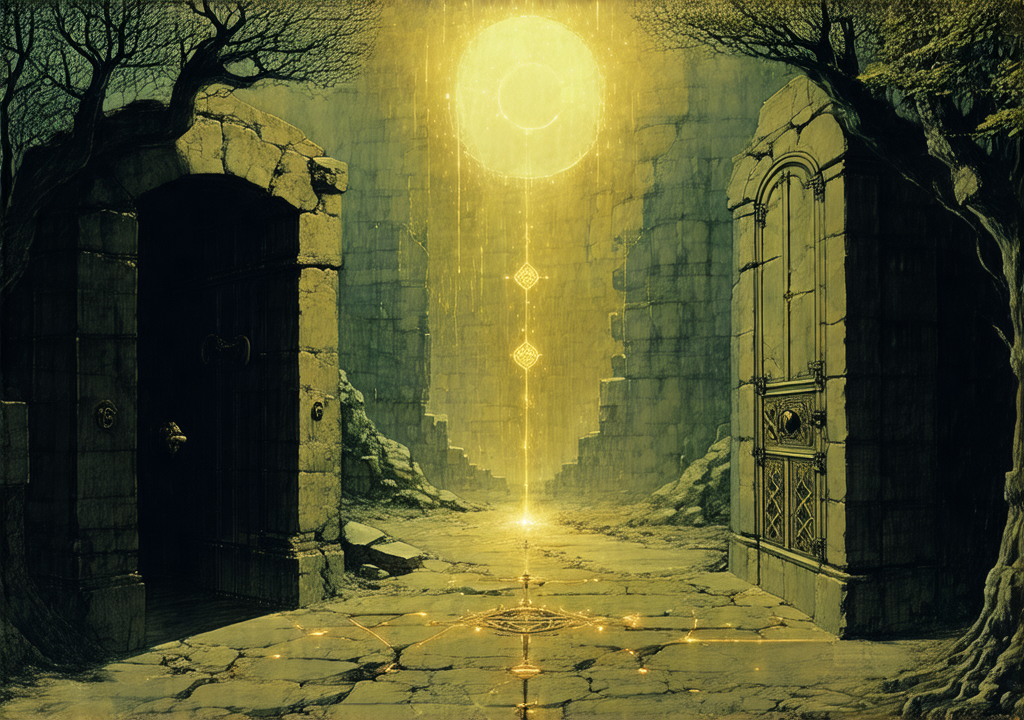
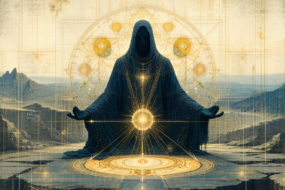
You have arrived at the threshold of my study, drawn by whispers you cannot quite name—whispers that hum beneath the surface of your daily life like a second heartbeat. Good. The fact that you feel them means your soul has already begun preparing for what I am about to reveal. Most people walk through their days asleep, unaware that between every moment there exists an invisible door, and within those doors lives a vast, breathing universe that responds only to those who know how to knock in the proper sequence.
I have spent my life studying the ancient traditions—Kabbalah, yes, but not as it is taught in classrooms or practiced by hobbyists. I speak of Kabbalah as a living, breathing system, one that has survived millennia and continues to evolve even now, waiting patiently for someone foolish enough—or brave enough—to push through its doors.
You see, the world around us contains secrets, but they are not hidden in mysterious places or guarded by dragons. The secrets are everywhere—encoded in the spaces between letters, embedded within the rhythms of time itself, concealed in plain sight for anyone who knows how to read them. A door exists at every intersection; it is simply that most people walk past them without noticing.
The Heretical Keys I speak of have no single name—they cannot be named so easily—but they are keys nonetheless: small, precise instruments of understanding that unlock doors you did not even know existed in your life. They work on principles older than language itself—the principle of correspondence, for instance, where the microcosm reflects the macrocosm; where what you do inside yourself echoes out into the world and what you find outside eventually manifests within.
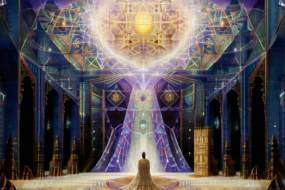
Consider this: every door has two doors. One opens outward, leading to understanding; one opens inward, leading to being. Most people only open the first door repeatedly, never discovering that behind it lies an entire architecture of hidden rooms waiting for them. The heretical practitioner understands this early on and begins opening both doors simultaneously from day one.
Now let me speak plainly about what these keys are.
The first key is Language—not language as most people know it (with its rigid rules and predictable meanings), but language in its raw, primordial form. When you read a word truly—not just with your eyes but with every part of yourself—you begin to see the door behind the word, the living presence that the word represents. This is why I say to students: read everything as if it were written specifically for them, because it was. Each letter carries weight; each syllable contains an entire world. The Hebrew letters alone offer a universe of meaning when understood not as symbols but as living entities with their own will and purpose.
The second key is Silence—not the absence of sound, but the presence of something deeper than sound. Silence has been called the language of angels; I prefer to call it the tongue of God. When you learn to listen during silence, doors begin appearing everywhere—in conversations that suddenly take on new meaning, in music that sounds as if it were composed for your exact situation, in dreams that carry their own logic and revelation.
The third key is Relationship—the relationships between things rather than the things themselves. What connects two people? What binds a thought to its cause? What links one moment to another? These connections are doors too, and they open when you begin paying attention to them rather than merely passing through life without noticing what holds it all together.
The fourth key is Time—but not the time measured by clocks and calendars. This is mystical time, which flows differently than physical time. Mystical time moves in spirals rather than lines; in circles that return to themselves with new meanings each rotation. When you learn to live inside this kind of time—when you begin to understand that certain moments carry more weight than others because they connect to larger patterns—you suddenly find yourself living in a world far richer than the one you thought existed.
The fifth key is Paradox—perhaps the most difficult for modern minds, who prefer certainty above all else. But truth rarely lives where we expect it; it often appears as its opposite, disguised. Light can be darkness; darkness can be light. Certainty can be doubt; doubt can be faith. Learning to live comfortably inside paradox—the place where two contradictory truths exist simultaneously—is the mark of a true practitioner.
These keys work together like instruments in an orchestra, each playing when called upon, creating music that opens doors you didn’t even know existed within yourself. Some people open only one door; others discover that once they have opened two or three, new doors begin appearing spontaneously wherever they look. The Heretical Keys were designed to be used together, not alone—each one reinforcing the others until their combined power becomes extraordinary.
I share this with you because I believe you are ready. You feel it too—the pull toward something larger than yourself, something that exists behind and within everything else. The doors exist; they always have. They open when we are ready to see them. And once opened, they do not close again completely—they remain in our life as places of return, as sources of meaning, as evidence that the world is far more alive and intentional than it appears.
The heretical part—the part that most people will dismiss—is simple: you must be willing to believe what you cannot yet see, to act on insights that have no external proof, to trust your inner knowing more readily than external validation. This is not madness; this is the opposite of madness. It is clarity at a level beyond ordinary perception.
So I ask you now, before closing my words: Will you pick up these keys? Are you willing to see what others miss, to hear what others forget, to open doors that have been waiting patiently for someone brave enough to step through them?
The answer was already written inside you before you arrived here. The question was simply whether you would recognize it when it appeared—and whether you had the courage to act on it.


Recent Post
Gallery






Featured Videos




No Comments