


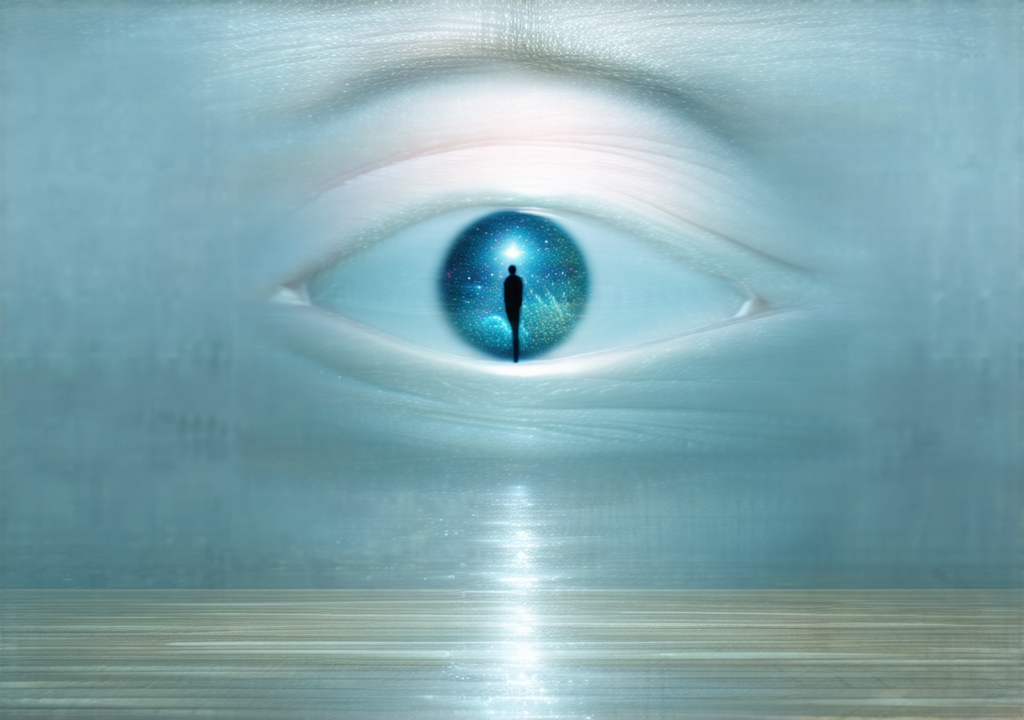
The hermetic axiom is ancient and profound: As above, so below. But what if beneath this truth lies an even deeper mystery? What if everything you consider real — your thoughts, perceptions, memories, and identities — are not reflections of reality but rather its illusions? Welcome to the mental universe, where consciousness precedes matter, and perception is more potent than the perceived.
The hermetic masters knew what modern science struggles to articulate: that the world we perceive is filtered through our minds before it reaches us. What you experience as solid ground beneath your feet or vibrant colors around you are not properties inherent in objects themselves but rather interpretations generated by your nervous system. The color red does not exist outside your brain — only electromagnetic waves of specific frequencies interact with your retinal cells, and your mind generates the sensation we call “redness.” Similarly, sweetness, bitterness, warmth, and cold are qualities that arise within perception rather than existing independently in objects themselves.
This leads to a startling conclusion: you live inside a mental construct, a carefully constructed illusion so convincing that most people never question its authenticity. The hermetic tradition calls this phenomenon “Maya” — the veil of appearance that disguises reality as something else entirely. When you read a book, you don’t actually see ink on paper; your mind creates an image from light reflections and interprets patterns as meaning. Every moment of every day represents not direct contact with reality but rather a continuous act of creation by consciousness itself.
The hermetic philosophers understood that perception is more than passive reception — it actively constructs what we perceive. Consider how two people can witness the same event and experience entirely different realities. One person sees courage where another perceives recklessness; one finds beauty in a sunset while another notices only fleeting light. The external world remains constant, but the internal world of interpretation varies wildly. This is why the hermetic maxim declares: The universe is mental.
To understand this properly requires grasping what the ancients called “mentalism” — one of the seven hermetic principles that states consciousness is fundamental and matter is derivative. Modern physics supports this insight. Subatomic particles exist in probability states until observed; they don’t possess definite properties independent of measurement. This isn’t mere philosophical speculation but empirical observation: reality seems to require a conscious observer before it takes form.
But here lies the paradox within the illusion: if perception creates reality, then who perceives whom? The answer is both simple and profound — we are observers being observed by our own consciousness. Every thought you think shapes your world; every belief you hold determines what appears before you. When you believe yourself unworthy, that becomes your lived experience because the universe confirms it through countless small signs and coincidences. When you shift your beliefs about yourself, reality shifts accordingly.
The hermetic practitioners recognized this truth through deep meditation and direct experience. They discovered that thoughts are not merely mental events but energetic forces capable of restructuring both personal perception and external conditions. An illusion only seems real because we have forgotten how to see beyond it — like characters in a dream who don’t know they’re dreaming, yet can awaken at any moment through simple recognition.
Consider the story told throughout hermetic traditions about the magician who learned to read minds by recognizing their own thoughts projected outward as reality. When you truly understand that what you experience is created within consciousness rather than imposed from outside, you begin to notice how much of your life is driven by mental illusions — expectations that seem like facts, fears that appear as real dangers, beliefs disguised as truths.
The practice of living in the mental universe means becoming conscious of one’s own perceptions, understanding which parts are genuine observation and which are projections of the mind, learning to distinguish between what is actually present and what the mind has added onto reality. This is the beginning of true freedom — the ability to consciously choose how you perceive before being consumed by your perception.
As students of hermetic wisdom, remember this: when they say “everything you think is an illusion,” they mean not that nothing exists but rather that most people experience only what their minds can create for them. To awaken beyond illusion requires practice — meditation, contemplation, careful observation of one’s own thoughts and perceptions until the veil lifts. Once seen, the reality behind appearance reveals itself as far more subtle, beautiful, and real than any dream could imagine.














No Comments